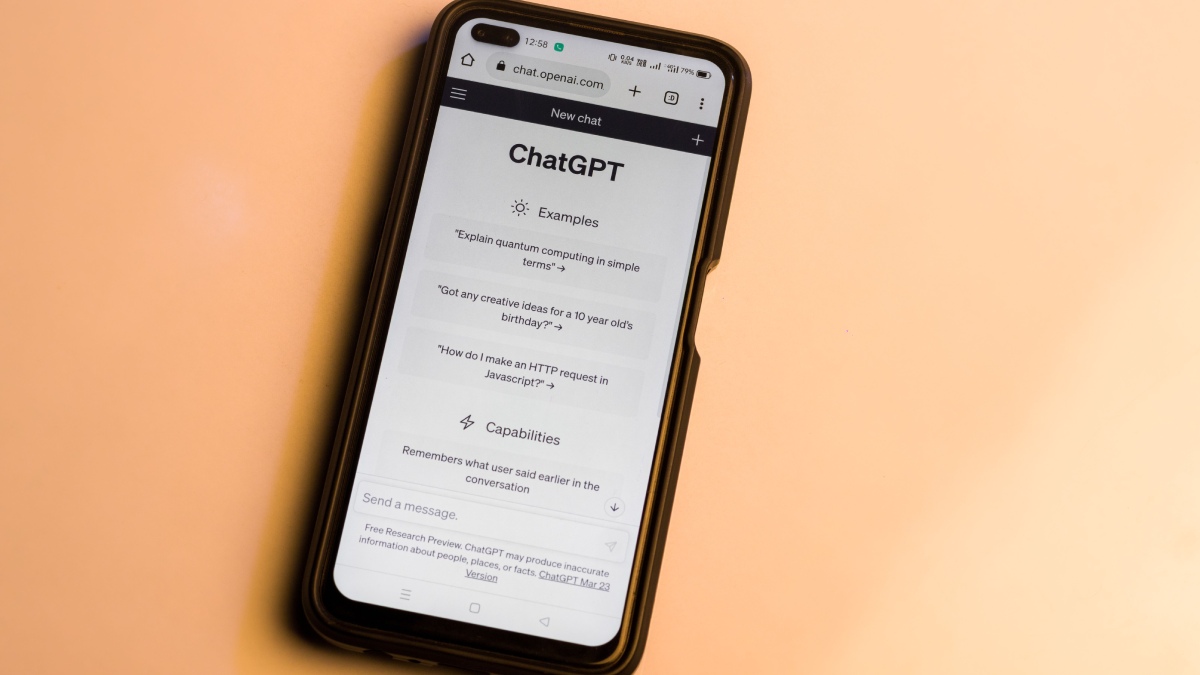
OpenAI has announced a new program to accelerate scientific innovation by providing free access to its advanced ChatGPT models to 100,000 academic researchers and scientists by 2027. The new ChatGPT for Academic Researchers program is intended to give the world's researchers a ready-made artificial intelligence tool for complex scientific work.

The initiative is indicative of OpenAI's bigger commitment to education and research by sharing the best AI technology to the world's most challenging scientific problems with the experts working in these fields at the forefront.
According to the company, it will provide researchers from selected universities and research institutions with the latest AI models at no cost. Rather than deciding the research focus, OpenAI wants scientists to use them to solve the questions and discoveries that matter the most in their domain of research.
OpenAI CEO Sam Altman expressed his excitement for the program on X social media.
"So excited for this. Very close to models that will dramatically accelerate scientific discovery; the best way to do this is for us to empower scientists, not try to figure out everything ourselves. We all deserve the benefits," Altman wrote.

The announcement comes at a time when AI is increasingly becoming an important tool in scientific research. Researchers worldwide are already using AI to speed up drug discovery, analyze huge datasets, simulate complex systems, develop research hypotheses, write code, review scientific literature, and improve productivity among other fields.
With ChatGPT for Academic Researchers, OpenAI will eradicate the financial barriers universities and research organizations may face before they can access premium AI capabilities. It believes that researchers can apply advanced models to research much faster and more effectively and can also be used as the basis of science in such projects.
OpenAI has not yet released eligibility criteria or an application process but said that the program will be expanded gradually until 100,000 researchers are covered by 2027.
Industry experts have welcomed that development as an important step in democratizing access to advanced AI technology. Many believe it would help researchers working in medicine, climate science, engineering, biology, physics, computer science, and other data-intensive fields.
OpenAI has also highlighted in this announcement its larger vision of building AI tools that are designed to help professionals rather than replace them. Instead of positioning AI as a decision maker, it is focused on collaboration between humans and artificial intelligence.
The launch comes at the same time as a fast-paced competition in the AI space with companies like Microsoft, Google, Anthropic, Meta, and xAI all expanding their AI offerings for education, research, and enterprise applications.
OpenAI has consistently introduced new initiatives to make AI more useful in various areas. From education and healthcare to software development and scientific research, the company is investing heavily in applications that make a real impact.
If implemented, the ChatGPT for Academic Researchers program could be one of the largest AI support initiatives ever launched for the global scientific community. OpenAI hopes to accelerate the development of breakthroughs in technology in sectors such as healthcare and clean energy and in space exploration and advanced computing that all need access to the state-of-the-art AI models.
The future of scientific discovery can only be shaped by AI collaboration between technology companies and academics. OpenAI’s most recent effort is a sign that more advanced AI tools are likely to become an essential part of modern research infrastructure in the future.