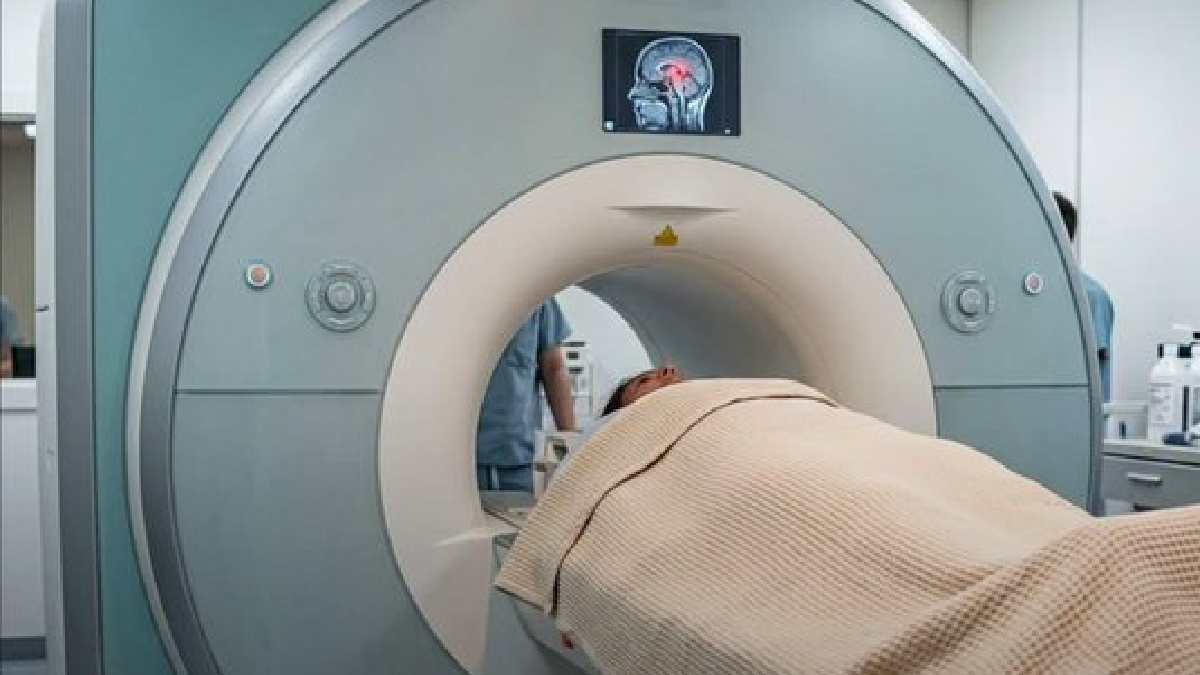
A new cancer treatment technology being implemented by Liverpool Hospital in Sydney is giving doctors an extremely accurate way to treat selected tumours by freezing them. The hospital has launched Australia’s first in-bore MRI-guided cryoablation system that allows specialists to monitor and control the treatment from real-time MRI imaging.
Cryoablation is a minimally invasive procedure that uses extremely cold temperatures to destroy abnormal tissue. In such a procedure, doctors inject a specialised needle-like probe into or near the tumour. A compressed argon gas quickly cools the probe and forms an ice ball around the targeted tissue. The temperature can drop to around minus 180 degrees Celsius, freezing the tumour while doctors monitor its treatment.
It is precision that is the most important part of MRI guidance. The high-resolution images help medical personnel see the ice zone developing during the procedure. This will allow them to fine-tune the treatment and avoid those important structures and healthy tissue which are in the presence of the tumour.
Such technology would be particularly useful for difficult-to-reach lesions such as tumours around sensitive areas of the spine and liver that are not easily accessible. Many spinal lesions have been more surgical in nature in the past with bone removal and hardware placement in order to stabilise the affected area.
With image-guided cryoablation, patients may also receive a minimally invasive procedure while lying inside the MRI scanner. This method can reduce the necessity of large surgical incisions and may also allow some patients to go home the same day depending on their condition and the specific treatment.
Pain relief is also a potential benefit when cryoablation is used for painful tumour lesions. Tumour tissue is destroyed and the pain pathways disrupted, effectively treating a patient who is ready for the procedure. Pain relief is slow and pain improvement is less than 100% from patient to patient.
The introduction of the system at Liverpool Hospital is at the forefront of image-guided cancer care in Australia. Specialists can now use advanced imaging to guide a targeted treatment directly to the affected area rather than just surgery.
Thus, cryoablation is not suitable for every tumour and not for every patient. Doctors should be aware of tumour size, location and type and its proximity to nearby organs and nerves before making a diagnosis. The treatment is therefore one of the options in personalised cancer care, and not a universal substitute for surgery.
MRI and minimally invasive treatments are continuing to advance and cryoablation could offer patients more targeted treatment options with potentially shorter recovery times. At Liverpool Hospital, watching the freezing process in real time is a big step towards more precise cancer treatments.