Central Florida officials confirmed the tragic death of an infant this week as the first pediatric vehicular heatstroke fatality in the United States for 2026. The deadly incident, which happened in Winter Haven on Tuesday, March 31, is also a terrifying reminder that the heat-related dangers of warming temperatures are becoming more acute as spring begins.
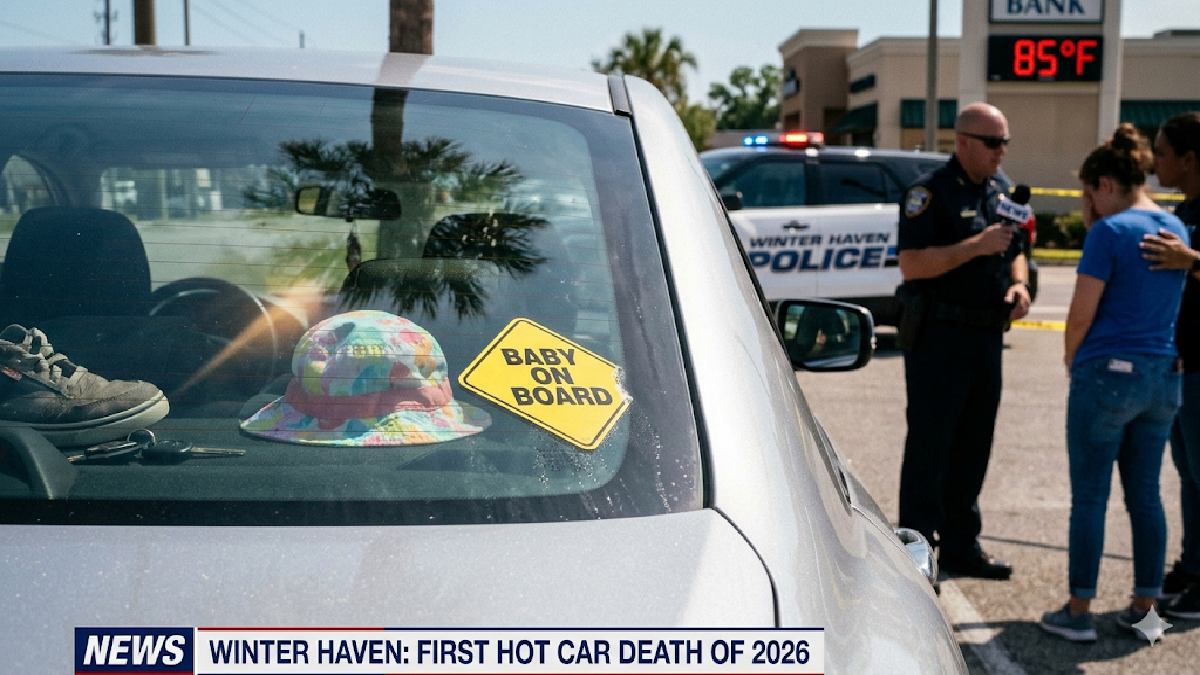
The incident in Winter Haven
The infant was found unresponsive after being left inside a vehicle, Winter Haven Police Department and local reports from FOX 13 reported. Temperature in the Winter Haven area was up to 85°F on Tuesday. 85 degrees may seem temperate to some people outside, but the physics of a closed vehicle makes the greenhouse effect lethal in a matter of minutes.
Police haven’t yet determined the circumstances of the child being left in the car, and they do not know how long the baby was trapped.
A Deadly National Trend
Kids and Car Safety, which tracks these tragedies nationwide, confirmed that this is the first such death of the new year. And the timing is interesting; while many people associate hot car deaths with the start of summer, Florida’s subtropical climate often results in early-season deaths.
Statistical data provides a sobering view of the scope of this issue:

- Annual Average: About 40 children die in hot cars across the U.S. each year.
- 2025 Retrospective: Last year, 35 children died in vehicles.
- Vulnerable Demographics: Almost 9 out of 10 victims are under the age of 3, a group that cannot communicate their distress or self-extricate from car seats.
Experts say in more than 50% of fatal cases, the child was unknowingly left behind by a parent or caregiver. These “memory lapses” are often triggered by changes in routine, high stress, or sleep deprivation, and so these tragedies can happen to families, regardless of their background or intentions.
The Science of the “Oven Effect”
Safety advocates are using this first fatality of 2026 to reiterate how quickly a car becomes a death trap. Even with windows cracked, the interior temperature of a vehicle can soar to dangerous levels in just 10 minutes.
Research suggests that 80% of total heat build-up happens in those first few minutes. The outside temperature is 85°F and the interior temperature in a car will go up to 104°F in 10 minutes and reach 119°F in 30 minutes. The body temperature of a child increases three to five times faster than an adult’s and internal organs start to fail when the core temperature goes to 104°F.
Preventative Measures for Caregivers
One in four deaths occur when a child wanders into an unlocked vehicle on their own, experts say, and we need to take a “layers of protection” approach:
- Let’s lock every door: Keep vehicles locked in the driveway or garage so kids can’t climb inside to play.
- The Look Before You Lock habit: Make it a habit to open the back door every time you park, even if you don’t think a child is with you.
- Visual Cues: Place a stuffed animal in the front passenger seat when a child is in the back, or place your left shoe or cell phone in the backseat to force a check.
- Strict Absence Policies: If your child does not show up at your child’s daycare, call your child’s babysitter immediately.
As Florida and the rest of the country coast toward warmer weather in 2026, safety leaders hope that this quick tragedy is a wake-up call to prevent further loss of life.