India and Nepal have signed a new package of development cooperation agreements covering key human development sectors, with the two countries signing memoranda of understanding (MoUs) for eight development projects focused on education, health and agriculture.
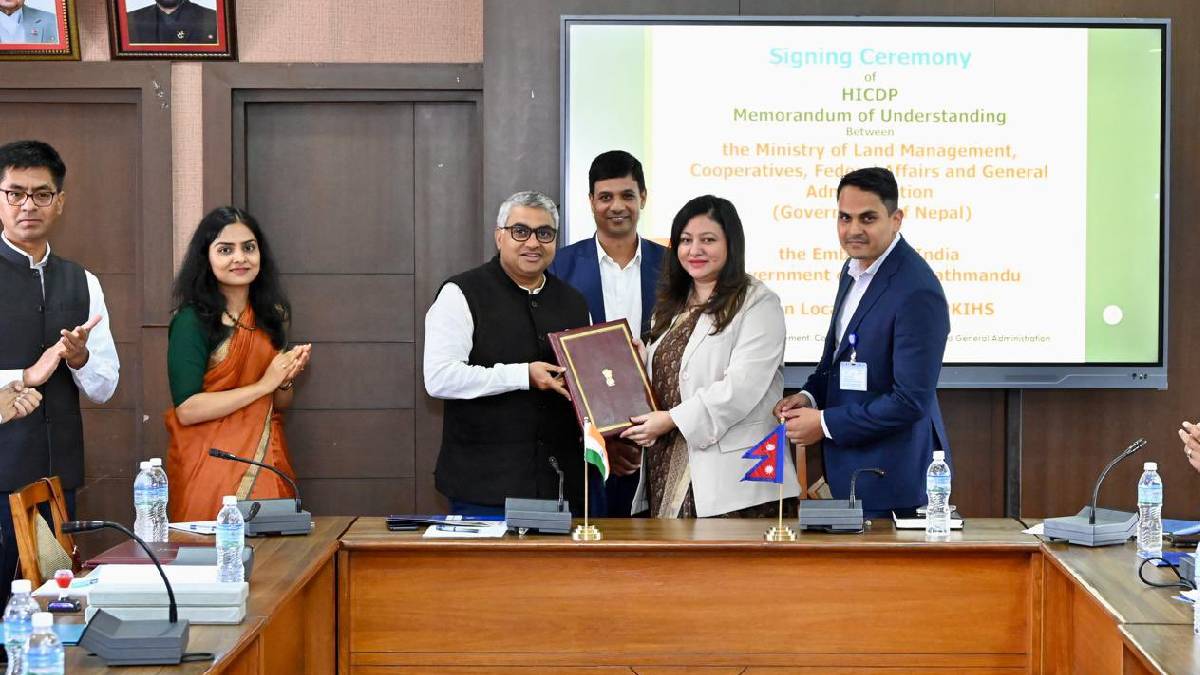
The agreements aim at improving cooperation in the sectors that are actually affecting the people and communities living in both countries. India and Nepal said the initiatives will serve human development and deepen the bilateral relationship between the two neighbouring countries.
Education is one of the central areas covered in the cooperation package. The two sides are expected to collaborate on school and higher education programme development and reform efforts. This cooperation should help promote school education partnerships, enhance educational opportunities and increase knowledge and skills exchange.
The emphasis on education reflects the importance both governments place on human capital development. Cooperation at the school level can bring about improvements in learning infrastructure and education delivery (e.g., partnerships with higher education can lead to academic collaboration, research and professional development).
Health is another major component of the agreements. The two countries have outlined measures to enhance primary healthcare and disease surveillance. Greater collaboration in these areas could enhance healthcare delivery at the community level and improve preparedness to identify and respond to public health challenges.
Primary healthcare is particularly important in ensuring that essential medical services reach people outside major urban centres. Cooperation between India and Nepal in this area could support knowledge sharing, institutional capacity building and the exchange of approaches to healthcare delivery.
Agriculture is the third major area covered by the agreements. The proposed measures will focus on increasing agricultural productivity, improving irrigation techniques and establishing farmer-training networks. Agriculture is still a major part of people’s lives in Nepal, and cooperation in agriculture and related areas is crucial to rural development.
The development of agricultural training programs for farmers would help to raise access to modern agricultural skills and technical knowledge among the agricultural sector of the country to be useful for farmers and for the development of farming culture. At the same time, a greater focus on irrigation and productivity would also help in making efficient use of agricultural resources and increasing farm production.
The agreements are part of India’s efforts to strengthen the India-Nepal development partnership. The two nations are very close in history, culture, economy and people-to-people relations, and cooperation in infrastructure, energy, trade, connectivity and development is still an important part of bilateral relations.
The new package, diplomats said, is another step in strengthening bilateral ties and regional stability. A focus on hands-on development projects also shows that bilateral cooperation is about the community level.
While the MoUs provide the framework for cooperation, officials said details of implementation in terms of timelines and funding arrangements will be finalised through joint committees. These mechanisms are meant to coordinate the next steps of the projects and monitor their progress.
Joint committees would also help to address implementation problems and ensure that projects that have been identified by both sides do move forward according to the priorities. Regular coordination between Indian and Nepali officials will be essential to translate agreements into completed programmes and measurable outcomes.
The recent agreements are in line with India's larger neighbourhood-oriented development cooperation. Nepal remains a key partner in India’s neighbourhood and development efforts in areas like education, healthcare and agriculture can also help deepen grassroots relationships between India and Nepal.
In these areas, cooperation could contribute to human development and rural livelihoods for Nepal. For India, the agreements build on India's commitment to collaboration with other countries through development-oriented partnerships.
The eight projects are so much more than individual efforts in education, health and agriculture. They are being framed by both governments as part of a larger strategy to develop durable institutional cooperation and strengthen the foundation of the India-Nepal relationship.
When joint committees begin to work on implementation timelines and funding shares, it will now be about translating commitments into projects on the ground. Successful execution could give more momentum to bilateral cooperation and show the practical benefits of India’s and Nepal’s long-standing partnership.
The latest MoUs underscore a common point from both governments: good neighbourhood relations are not only the result of diplomacy but of ongoing cooperation that brings people’s well-being.