NASA has successfully launched its Nancy Grace Roman Space Telescope, an important step toward answering some of the universe’s most critical questions.
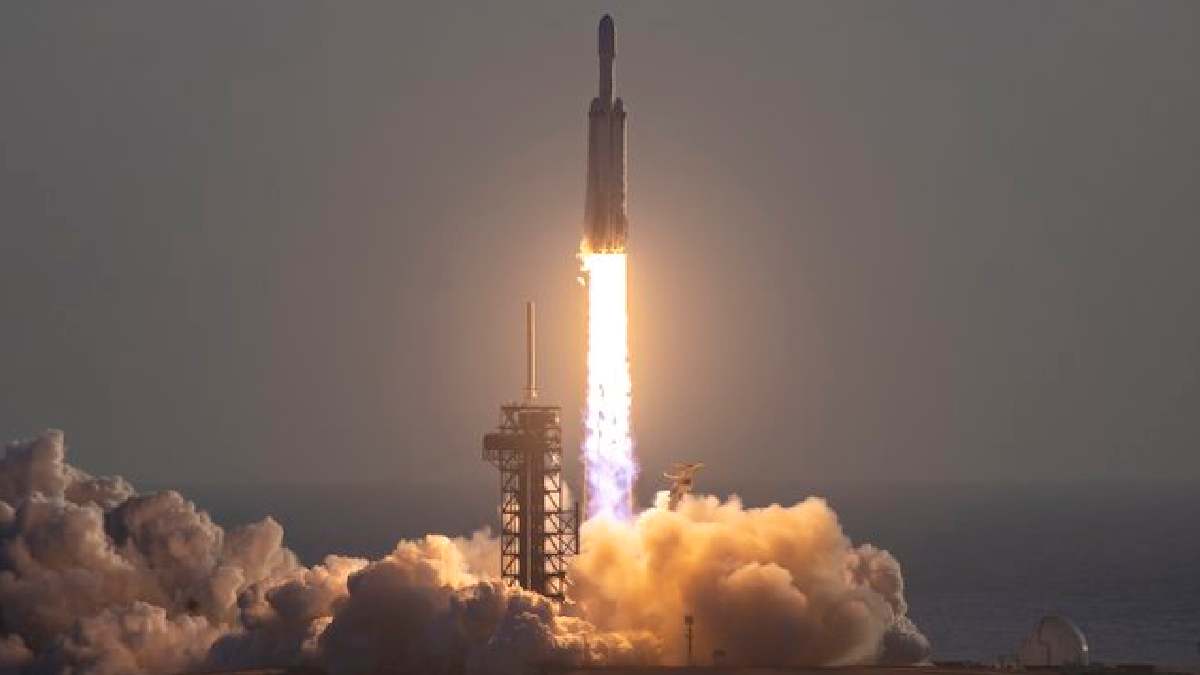
The powerful space observatory launched from Launch Complex 39A in NASA’s Kennedy Space Center in Florida on August 30 aboard a SpaceX Falcon Heavy rocket.
The launch took place at 7:26 a.m. EDT and sent Roman on a roughly three-month journey to its last operating site near the second Sun-Earth Lagrange point, or L2 nearly 1 million miles from Earth.
NASA confirmed on the morning of launch that the spacecraft successfully separated from the rocket and began its journey.
A New Eye on the Cosmos
Named after Nancy Grace Roman, NASA’s first chief astronomer and a key figure in the development of the Hubble Space Telescope, the new observatory will offer a wide view of the universe.
Roman combines high-resolution infrared observations with a field of view at least 100 times larger than Hubble.
NASA says the telescope will also be able to survey the sky up to 1,000 times faster than Hubble so scientists can examine huge areas of space in a very short time.
The telescope’s main focus will be dark matter, dark energy, exoplanets, and more. Scientists think Roman will give us some clues about how the universe evolved and why it is expanding at a faster rate now.
Falcon Heavy launches @NASA’s Nancy Grace Roman Space Telescope from pad 39A in Florida, beginning its more than three-month journey to its destination where it will generate never-before-seen photos of the universe pic.twitter.com/L3gHrBiQ08
— SpaceX (@SpaceX) August 30, 2026
Searching for New Worlds
Roman will also conduct a large-scale survey of planets beyond our solar system. Its state-of-the-art instruments will help researchers find and study exoplanets, and create a statistical picture of planetary systems throughout the Milky Way.
One of the main technologies is the 'Coronagraph Instrument', which can block out the strong light from stars to make the planets easier to see. The technology may also be of use for future missions to directly study potentially habitable worlds.
Billions of Cosmic Objects
Roman's Wide Field Instrument has a 300-megapixel infrared camera capable of taking big panoramic views of the cosmos.
NASA expects the observatory to generate about 1.4 terabytes of data every day, making it an incredibly large resource for astronomers around the world.
The mission is expected to last at least five years and scientists expect a lot more discoveries beyond the original purpose.
NASA will do extensive testing and calibration over the next months and the first Roman images are expected to be taken in early 2027.
With its launch, we will witness a new chapter in space astronomy. The Nancy Grace Roman Space Telescope will explore large areas of the universe with record speed, so that our universe will also expose us to new aspects of our universe: galaxies, stars, planets, and the forces that shape our universe.