A warm video of children at a school in China doing their morning exercises to Punjabi music playing during their morning fitness routine has caught the attention of people on social media.
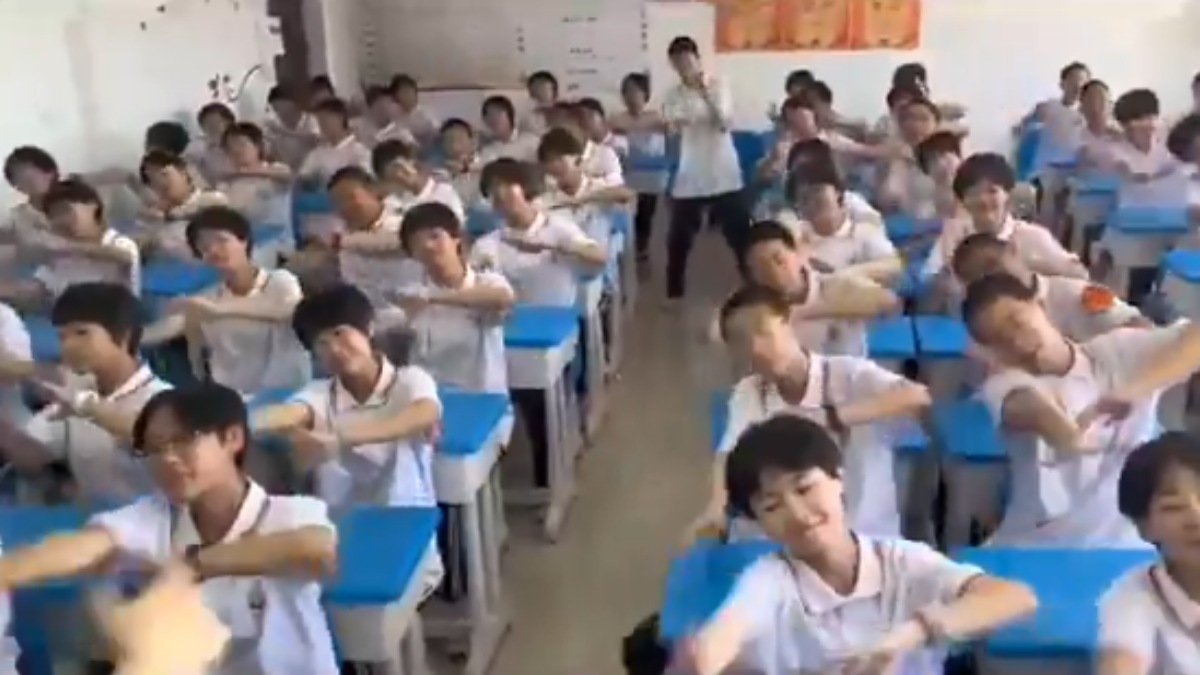
The video has been widely shared and promoted on many platforms with young students dancing and jumping up and down in sync while Punjabi music plays in the background.
This video has received praise for its unique blend of cultures and how music transcends language barriers and brings people together. Chinese schools have a daily morning exercise program but, for many, the use of a Punjabi track has been surprising and delighted to the listener, especially those in India and the international Punjabi community.
The viral footage shows rows of school kids doing stretches, rhythmic movements and fitness exercises under the guidance of their teachers. The Punjabi song is lively and upbeat, and the children are motivated throughout the entire session. Teachers have tuned exercise to the sound of the music and it is fun and motivating to be there.
The video has been hailed by thousands of people on the internet, who say Punjabi music is reaching people outside South Asia. The video is a great example of the universal appeal of Punjabi beats, which are known for their vibrant rhythms, catchy melodies, and infectious energy.

Punjabi music has been expanding in worldwide reach over the past decade. Once a part of India and Pakistan’s Punjab region, Punjabi music has made its way to the world via streaming services, international collaborations and social media. Punjabi music has been promoted by Diljit Dosanjh, AP Dhillon, Karan Aujla, Sidhu Moose Wala and Guru Randhawa in North America, Europe, Australia, the Middle East and East Asia.
Punjabi music in a Chinese school’s day-to-day life is a reflection of the rise of global entertainment in the education and recreation industry.
Schools usually play upbeat music during physical activity sessions because music is beneficial to kids’ motivation, coordination and participation in activities. A Punjabi-led playlist may have been chosen to make the exercises more fun for the students while also exposing them to music from another culture.
Education experts have long stressed the benefit of music in children’s physical activities. When rhythmic music is part of the routine, concentration is raised, coordination is improved, and stress can be reduced and active participation is encouraged. Kids who associate physical activity with sound music are more likely to be enthusiastic about doing workouts every day.
The viral video has also become a symbol of cultural exchange. Today's globalized world has students increasingly exposed to traditions, languages, and music from other countries. Such experiences can help to promote curiosity, appreciation for diversity and greater cross-cultural understanding from an early age.
Many viewers were also impressed by the clip and viewed it as a reminder that music can be a universal language that connects people, of any country, worldwide and across language barriers. Indian users were especially impressed by seeing Punjabi culture in a Chinese school and international users liked it when the students were so happy.
Punjabi Song used in a Chinese School for Children's Morning fitness class aur ek hamare school...
— Bindasfauji 🇮🇳 (@bindasfauji) July 21, 2026
"May I go to toilet" par bhi bitha diye jaate hain
🤣😅 pic.twitter.com/c5KPpUyvhw
The identity of the school and the Punjabi song was not confirmed in many of the viral posts, but the video is spreading like wildfire online and the positive reactions are testament to just how culturally integrated moments can be felt by millions of people around the world.
As Punjabi music continues to dominate international charts and inspire dance challenges, fitness routines, and cultural celebrations across continents, this charming scene from a Chinese school is another example of the genre’s growing global reach. It is not so much a viral video. Music has the power to bring nations together, inspire young people and bring joy beyond geographical boundaries.