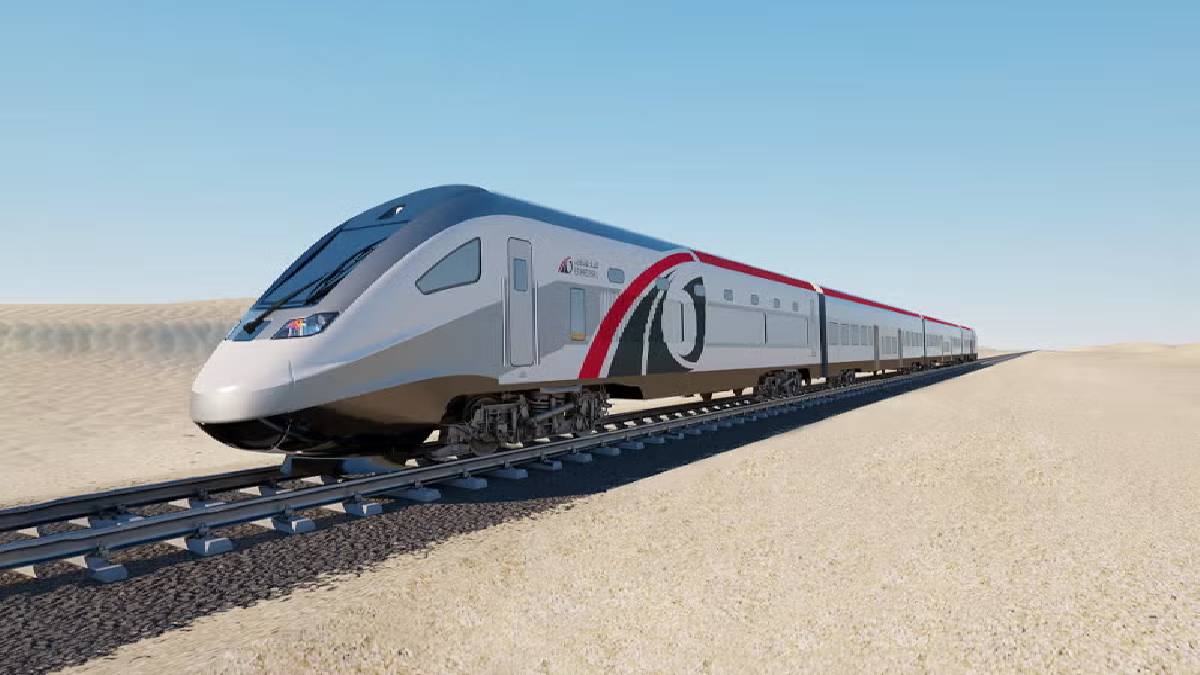
In 2026, it will announce the launch of the first national passenger rail network to provide the next level of transit for the UAE. Part of Etihad Rail, the network plans to link pivotal cities like Dubai, Abu Dhabi, Sharjah and Fujairah with rapid and hassle free journeys across the nation, revolutionising the region’s connectivity.
A New Era of Travel
Though Etihad Rail already had a freight service, passenger traffic, for citizens, residents, and visitors who will be transported to and from major cities and economic centers by train in 2026, begins in 2026. Ultimately, the network will run at a length of 900 kilometres that will encompass all seven emirates and link 11 cities and regions. To cut travel times dramatically, the new rail will enable, for example:
- Abu Dhabi to Dubai: about 57 minutes by train (1.5–2 hours by road).
- Abu Dhabi to Fujairah: About 105 minutes.
Fast high-speed rail connections may become a reality in phases to come, which could make commuting even faster and better.
Stations and Connectivity
Passenger services will commence at 11 stations, with major hubs in Abu Dhabi, Dubai, Sharjah, Fujairah. Stations are being designed as multimodal transport hubs, connecting not only buses but taxi and metro service as well to deliver smooth seamless first and last mile linkages. Key stations include:
- Mohammed bin Zayed City (Abu Dhabi)
- Jumeirah Golf Estates (Dubai)
- University City (Sharjah)
- Al Hilal (Fujairah)
- Other stations in Al Sila, Al Dhannah, Al Mirfa, Madinat Zayed, Mezairaa, Al Faya and Al Dhaid
Contemporary Trains & Passenger Experience
Etihad Rail passenger trains can operate up to 200 km/h and carry up to 400 passengers per train. Passengers can expect:
- Interior and seating of modern style
- Wi-Fi and digital services
- Multiple classes of service including economy, business and first class
- Electronic ticketing for seamless booking
Etihad Rail Development Timeline
- 2009 – Project Initiation: Etihad Rail was formed in 2009 to build out a national railway system linking all seven emirates, initially with a focus on freight transport.
- 2011–2015 – Phase 1: Freight Network Management: The first leg (264 km) linking Ghabawi with Ruwais in Abu Dhabi commenced shipping, carrying industrial goods and petroleum products.
- 2016-2020 Growth and Passengers Planning: The network grew north and east towards Dubai, Sharjah and Fujairah. Planning for passenger services began including high-speed corridors between major cities.
- Construction and testing 2021–2024: Passenger train stations, tracks and infrastructure were built. Safety and operational readiness was demonstrated with tests of the system.
- 2025 – Final Preparations: Passenger trains were finalised with digital ticketing systems established, and announcements made for the 2026 passenger launch in public.
- 2026 – Passenger Service: The first passenger trains will run between Abu Dhabi, Dubai, Fujairah and other emirates, helping to cut travel times and enhance mobility.
- Beyond 2026 – Future Expansion: The network itself will grow and could link up with Oman and Saudi Arabia. Further high speed services and routes are designed to extend regional connectivity.
Economic and Strategic Benefits
The passenger rail network is set to:
- Strengthen connectivity in all emirates
- Reduce congestion and travel time on major roads
- Offer sustainable, low-emission travel
- Encourage domestic tourism and economic growth
The Etihad Rail passenger network is a landmark accomplishment in UAE: it becomes a hub of modernity and integrated transportation in the Gulf region, which is not only environmentally-friendly but also convenient.