Though the garden city is known for its pleasant springs, March 2026 is a “double shock” that health experts and meteorologists are worried about. It is not only the increasing mercury that residents should worry about, it is a quiet, invisible menace from the sun. On Tuesday, Bengaluru read an Extreme UV Index of 13 a level of the World Health Organization (WHO) rated as dangerous and potentially life-changing.
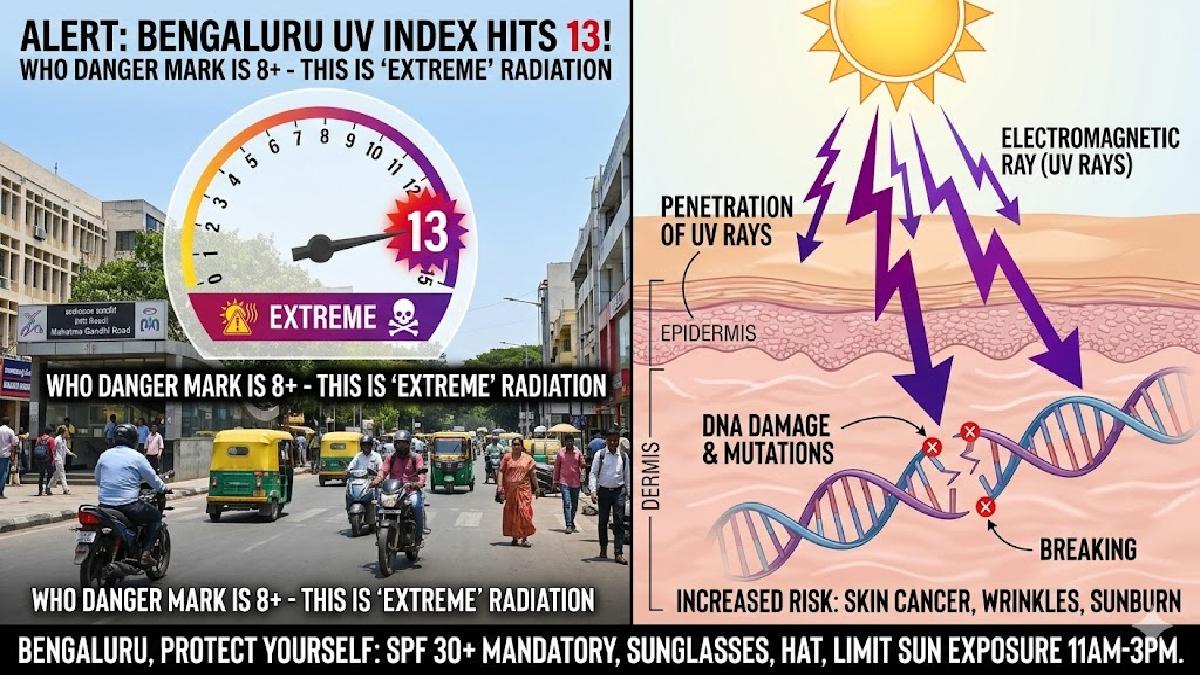
UV of Bengaluru is usually acceptable at the beginning of the summer. Yet, within 48 hours, the index jumped from 10 to a mind-boggling 13. To give a bit of context, anything above 8 is "Very High" risk to those not accustomed to it, and anything 11 or better is "Extreme."
The Paradox: Fairly Warm, Irradiating Radiation
Strangely, the city's temperature is currently 32 degrees in the sky, and that may just be a typical summer day. Despite this, heat does not always match UV index. The thinning of the atmospheric layers together with clear skies enable high-energy radiation to enter the surface even when the air is considered fairly cool. Even at the first quarter of summer this massive surge is an indication that the city is experiencing a new set of environmental conditions.
Understanding UV rays: The unseen enemy
Ultraviolet (UV) rays are a type of electromagnetic radiation that is emitted by the sun. As opposed to visible light, you aren’t able to see or feel them until the damage’s been done. These rays have enough energy to reach the deep layers of human skin, to penetrate the dermis and induce cellular-level structural changes.
The UV Index Scale Breakdown:
- 0–2 (Low): Safe outdoor
- 3–5 (Moderate): Recommend protective measures.
- 6–7 (High): Protection needed; seek shade.
- 8–10 (Very High): Potential for skin damage in minutes.
- 11+ (Extreme): Take all precautions and keep away from the sun altogether.
The Health Toll: From Wrinkles to DNA Damage
But when the UV index hits 13, the risks are not simply for a simple tan. Some doctors in Bengaluru are bracing to see an increase in cases of the following disorders;

- DNA Damage: High UV light damage the chemical bonds in your DNA which results in mutations.
- Skin Cancer: Long-term exposure from repeated UV exposures along these lines dramatically raises the risk of melanoma, non-melanoma cancers of the skin.
- Early aging: UV light break down collagen and produce deep wrinkles and “leathery” skin much earlier.
- Sunburn & Erythema: The skin deep red, burning or blistering skin.
- Eye Damage: Higher chances of developing cataracts and photokeratitis (sunburn of the eyes).
How to Protect yourself
Now that the index has reached an extreme level, The "Garden City" has to take a "Safety First" approach. According to medical experts, the following protocol needs to be followed:
- 11-to-3 Rule: Avoid direct sun exposure between 11:00 and 3:00 p.m., when UV radiation is at its highest levels.
- Sunscreens are mandatory: Put on a broad-spectrum SPF 30+ sunscreen. Reapply every two hours if you’re outside.
- Physical Barriers: Wear wide-brimmed hats and use umbrellas. Opt for tightly woven and long-sleeved clothing.
- Eye care: All sunglasses should have UV protection: 100% UV protection (marked UV400) to keep away from long-lasting damage of the retina.
- Hydration: High radiation increases metabolic stress in the body. Drink plenty of water to keep your skin hydrated in the interior as well.
As Bengaluru goes through the extreme weather event, they encourage residents to stay informed. This is not just about the heat — it’s about shielding your biological health from an invisible hand.