A Blinkit delivery executive was attacked by a leopard in Indore, Madhya Pradesh, at Bicholi Mardana area of Indore but escaped to a nearby hospital after being attacked by the leopard in a case that has raised fears of increasing human-wildlife encounters in rapidly growing urban areas. The leopard took a leap from a height of over six feet before attacking the delivery worker working in the locality and hurt him.
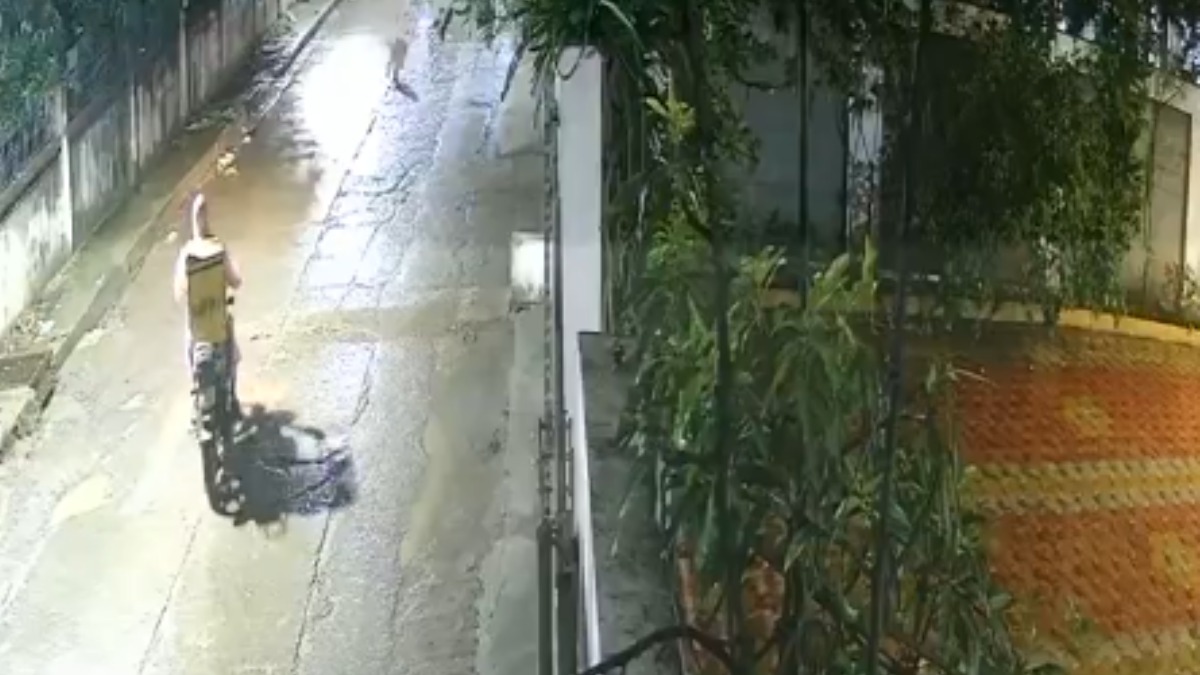
The victim was rescued with the help of local residents and taken to a nearby hospital, the police said. His condition is said to be stable and forest officials have launched an operation to locate and safely capture or drive the animal away from settled areas.
The attack was during routine delivery operations when the delivery executive was in the neighborhood. Witnesses heard cries for help before residents rushed to the scene. Their quick action is hoped to have averted the attack from becoming more serious. Emergency services were informed immediately and the injured man was first treated and taken to a medical facility for further treatment.
After the attack, the Forest Department and local police were on the scene to respond to the situation. Teams searched for the leopard, and residents were advised to stay inside, avoid off-the-beaten-path routes, and report any sightings immediately. A trained wildlife representative who knows how to handle wildlife incidents is also to be approached, and not to provoke the leopard is required, it said.
The incident has frightened residents of Bicholi Mardana, many of whom now worry if the leopard remains around. Forest employees have been putting up surveillance teams and are also checking movement patterns in the area. Depending on the situation, officials could use camera traps or cages to safely capture the animal if necessary. Wildlife experts stress that, on the other hand, such operations are all about public safety and the welfare of the animal.
Leopard sightings around residential areas have become more common in some parts of India, particularly in rural areas. Wildlife experts have attributed these encounters to habitat loss, reduction of forest cover, increased human activity in or around wildlife corridors, and availability of food sources (e.g., stray animals). Leopards are very adaptable and can move through agricultural fields, riverbanks, and peri-urban areas, often avoiding direct contact with humans if possible.
Most leopards do not seek confrontations with humans in the wild, and they don’t fight aggressively. But in case of sudden contact - and especially when the animal feels threatened, startled, or cornered - it is the latter that can prompt defense. Wildlife authorities therefore urge people in leopard-prone areas in the early morning and late evening to be alert, travel in groups, and avoid entering dense vegetation.
The attack also highlighted the occupational hazards facing delivery workers who often travel through neighborhoods at different times of the day. Delivery executives often have a very busy work life and may be subject to weather and traffic conditions problems, stray animals, or even wildlife in the case of emergency. Emergency awareness and quick access to medical help are the top public safety experts say.
The Forest Department has pleaded with the public to cooperate with rescue teams and not spread rumors or chase the animal. Crowding around a wildlife sighting can heighten stress for the animal and complicate rescue operations, officials say, and if you see leopard movement, you have given people a chance to report it via official channels.
Environmental experts argue that long-term solutions to human-wildlife conflict have to be based on scientific land-use planning, wildlife corridors conservation, habitat management, and greater public awareness.
Leopard attacks on Blinkit Delivery guy at Night, somehow he escaped💀pic.twitter.com/auGUfIBiYE
— BiswaaX (@BiswaaX) July 8, 2026
As cities grow closer to forest boundaries, ecological connectivity is becoming more and more important for avoiding accidental interactions between humans and wild animals. Community education programmes can also help residents to know if they should respond in a humane way to wildlife encounters to avoid unnecessary panic.
Medical personnel treating the wounded delivery executive are expected to continue monitoring his recovery, as the attack is being investigated. The Forest Department will be doing a detailed assessment of the leopard's movement in the area and will assess the extent of any additional protection necessary in the vicinity of the facility to protect the people from the leopard.
The incident is a reminder of the growing challenges of urban expansion into natural habitats. The balancing act of development and wildlife conservation is needed for reducing conflict and ensuring the safety of people and animals. The rescue work in Bicholi Mardana continues and its safety is to be kept in mind, and trained staff is also to be kept safe, said the officials.