Karnataka Chief Minister DK Shivakumar was in the Karnataka Vision 2030 CSR Conclave hosted by the Greater Bengaluru IT Companies and Industries Association (GBITCIA), where he highlighted close collaboration between the government and industry as critical to advancing the state's development for the future.
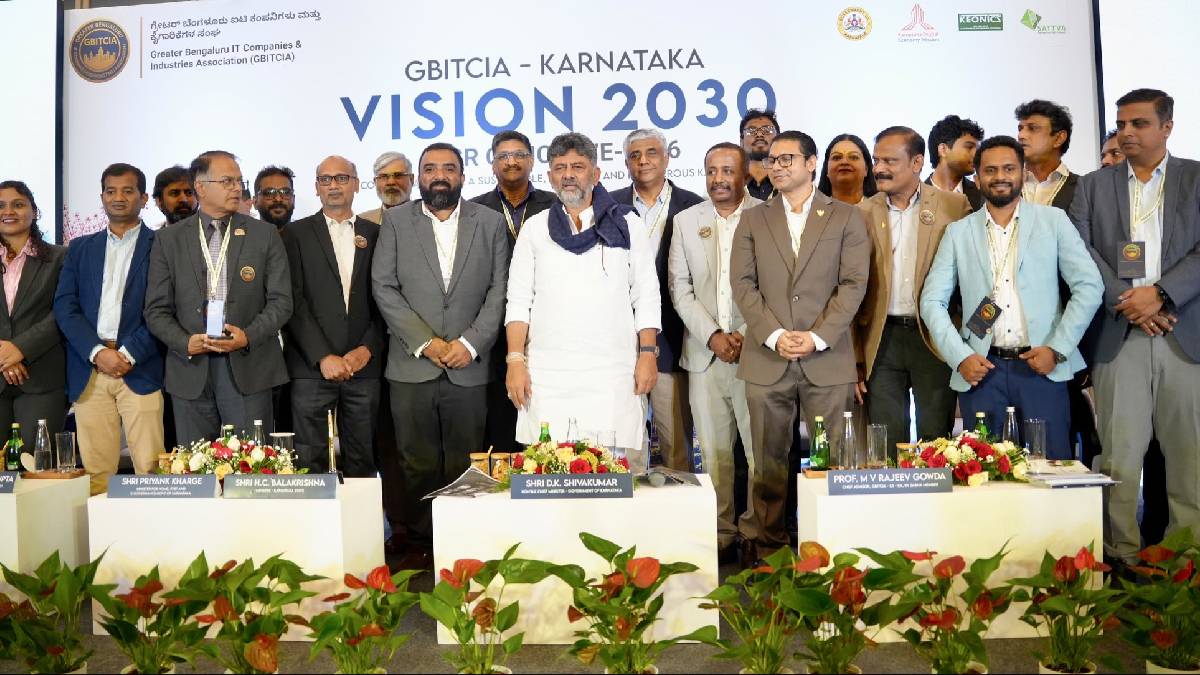
The conclave invited leaders from Global Capability Centres (GCCs), IT companies, and different industries to discuss how the development plan for Bengaluru South and Karnataka beyond 2026 can be achieved. The conference aimed to harness Corporate Social Responsibility (CSR) to achieve inclusive growth and long-term social impact.
Glad to participate in the Karnataka Vision 2030 CSR Conclave, organised by the Greater Bengaluru IT Companies and Industries Association (GBITCIA). It was encouraging to interact with leaders from GCCs, IT companies and industry who came together to discuss Bengaluru South's… pic.twitter.com/LHj1v8jGsT
— DK Shivakumar (@DKShivakumar) August 7, 2026
Shivakumar shared his thoughts after the event, saying he felt pleased to meet industry leaders who came together to share their views on the future of Karnataka and provide ideas for the future.

Corporate Social Responsibility has the potential to change lives when it goes beyond philanthropy and becomes a shared commitment to nation building, he told us. In such instances, the government and private sector will have to collaborate to develop sustainable solutions that address the state’s development challenges, he added.
The Chief Minister stressed that public-private partnerships between government and industry should focus not only on economic growth and development but also on education, infrastructure development, and skill development for the youth of Karnataka.
Education was one of the key themes in his address. Shivakumar said every child in Karnataka, whether they live in Bengaluru or even in the most remote village, deserves access to the same quality of education and equal opportunities to learn and succeed.
He said, “Children should never be limited by where they’re born and where they study” – governments and industries need to work together to overcome educational disparities across urban and rural areas.
Shivakumar said Karnataka’s future depends on making sure talent is being nurtured everywhere in the state and that opportunities are based on potential rather than geography. Under CSR projects, he said he would like to see the corporate sector actively take part in improving school infrastructure, digital education, teacher training, and skill development.
The conclave also provided an opportunity for discussion on the development strategy of Bengaluru South and the best way for GCCs, technology companies, startups, and industrial organisations to help build Karnataka’s innovation ecosystem and ensure Karnataka’s leadership in technology and investment.
Industry leaders emphasized the increasing role CSR is playing in public welfare initiatives, and government representatives called on companies to align CSR investments with the state’s Vision 2030 objectives.
The discussion reflected a common commitment to sustainable partnerships that combine government policy support with private sector expertise and resources. Collaborative efforts involving education, healthcare, digital infrastructure, environmental sustainability, and employment opportunities could be very beneficial and productive, the participants said.
DK Shivakumar did state at the close of his speech that Karnataka's vision for the future is one where every child is treated with equal opportunities and development occurs within every part of the state. Government, industry, and civil society would have to come together to create a Karnataka that is more inclusive, innovative, and prosperous by 2030.