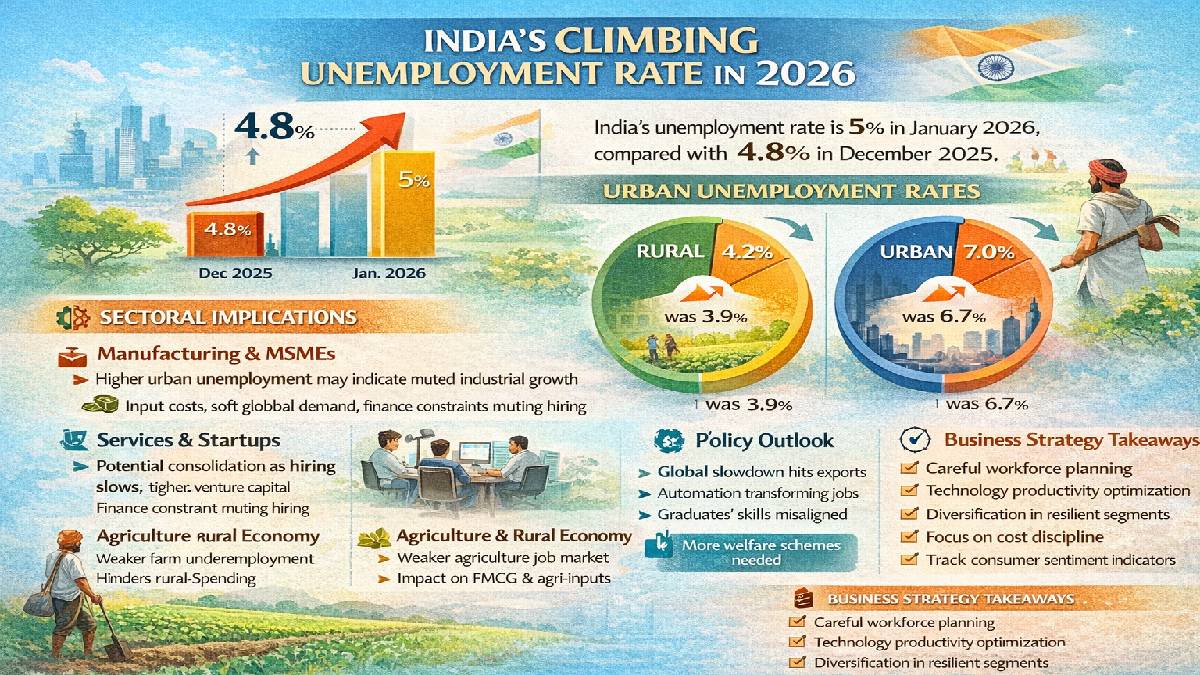
India's expanding higher education system has produced a record 6.3 crore graduates in the 20-29 age group, in line with the country’s growing focus on university education and skill development. But this educational progress has come at the expense of a challenging labour market as a result—two out of every three unemployed young people in India are graduates.
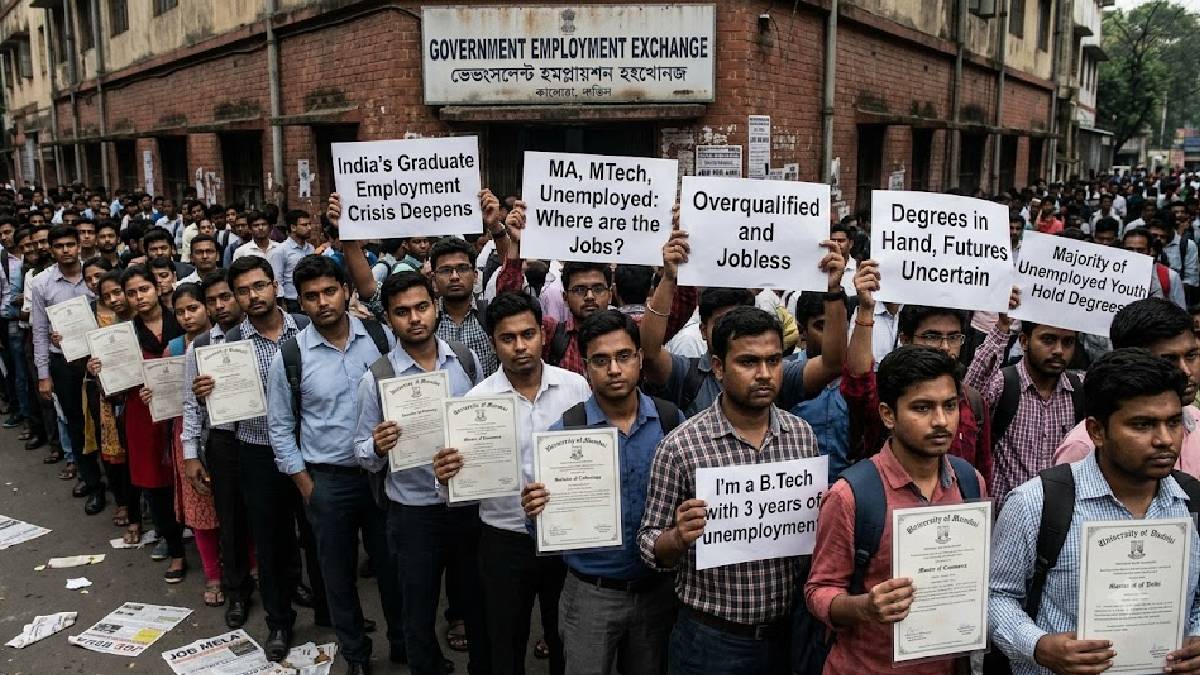
These figures show that there is a growing gap between educational attainment and employment opportunities and bring back new questions about graduate employability, job creation, and the alignment of academic qualifications with industry requirements.
In the last two decades, India has witnessed huge growth in colleges, universities, and professional institutions. In the last decade, millions of young people have obtained undergraduate and postgraduate degrees in India. Access to higher education has been greatly enhanced, and students from all socio-economic divisions are getting to university.
The pace of employment generation has not kept pace with the increasing number of graduates entering the labour market. Many degree holders (even in well-qualified positions) are still job searching or unemployed despite having formal education.
Various factors contribute to the situation, labour market professionals point to. One of the most common problems is the mismatch between university curricula and the skills employers demand. Many industries now require practical knowledge, digital skills, communication skills, and specialist technical skills in addition to academic degrees.
As employers have mentioned, even if graduates have some theoretical knowledge and skills, there is often more training needed to be done before they can get into job-ready training to become ready. As a result of this, companies have decided to do extensive induction and skill-building programmes, and many graduates are looking for further certification to be trained further to be a better job-ready person.
Another factor is the growing aspiration of educated young people for formal, stable, and higher-paying jobs. Many graduates would prefer government jobs or organised work or jobs in the organised sector. In the job market, there are few jobs in government jobs, and they compete with them. As a result, there are large numbers of qualified candidates and few jobs.
India’s economy is also transforming the nature of work. New sectors like artificial intelligence, data science, renewable energy, cybersecurity, fintech, biotechnology, and advanced manufacturing are emerging. But these sectors require special skills that many graduates may not have been able to acquire through traditional degree programs.
To address these challenges, governments, educational institutions, and industry organisations have started various projects to enhance employability. Skill development, vocational education, apprenticeships, startup promotion, digital literacy, and industry-academia cooperation are all part of a set of tools that aim to connect education and employment.
Experts have also stressed the need for curriculum revamping, better internship opportunities, entrepreneurship support, and ongoing upskilling to ensure graduates can remain competitive in today’s competitive job market. Higher-level collaboration between universities and industry is widely viewed as critical for students to work and make it to the real job market.
The issue has broader economic implications as well. A young and educated workforce is one of India’s biggest demographic advantages. But if a large percentage of graduates are unemployed or underemployed, productivity, household incomes, consumer spending, and long-term economic growth could be affected.
The rise in graduate numbers at the same time tells us what the young people of India are going through. Now it is the job of economic development to create enough jobs for them and develop them as they are ready for the job market with the skills of the emerging sectors.
As India aims to become one of the world’s largest economies, graduate unemployment will be the key policy priority. High-quality jobs, innovation and entrepreneurship, skill development, and modernisation of education will be critical for making it easier for the country’s expanding generation of graduates to become catalysts of economic growth and national development.