All this stands in stark contrast to the last round of KERC announcing the very highest electricity tariff ever to hit household consumers in Karnataka. The regulator has imposed 56 paise more per unit tariff, now set to put millions of households already undergoing a spiralling rise in living costs under pressure.
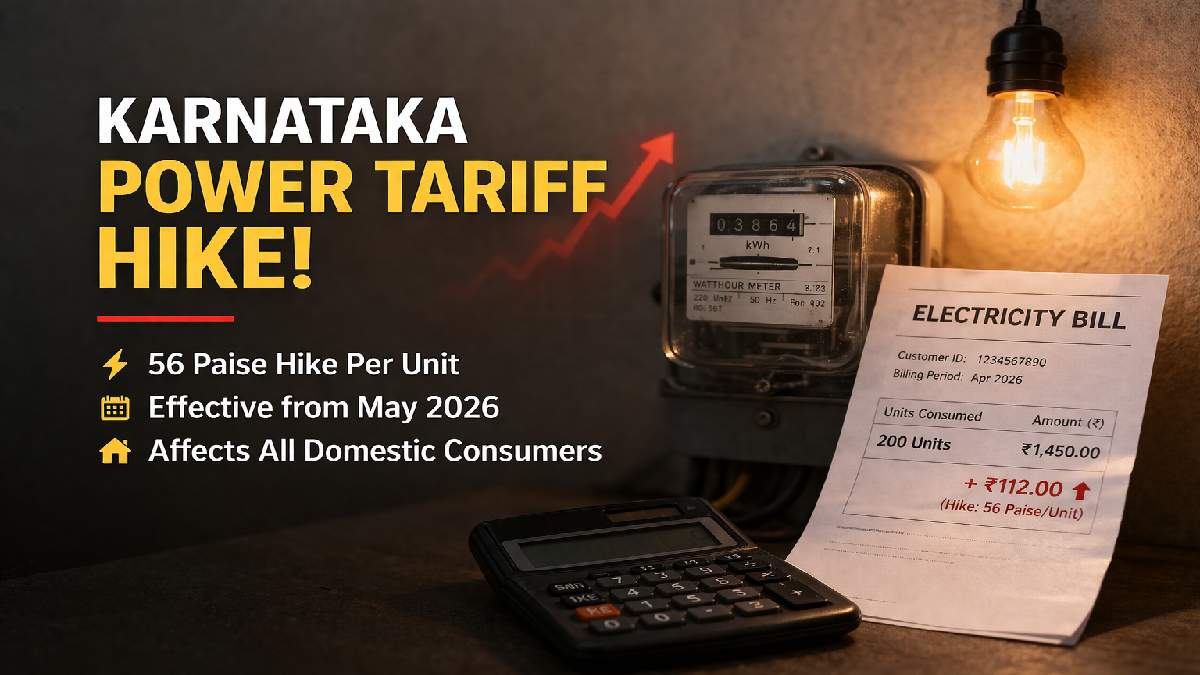
The new rate will start in May 2024; the additional charges will be included in consumers’ electricity bills from next month. The move has alarmed middle-class and low-income families, who would feel the pinch of a budget squeeze.
Why the Tariff Hike?
The electricity tariff was jacked up by mounting financial pressures from the state’s power distribution companies, or ESCOMs, spiked after the price of electricity shot up. These companies went to KERC for the shift of tariffs as a guarantee of serious losses and financial calamitous events.
KERC projected electricity sales for FY 2024–25 as ₹34,084 crore. But in fact, they only obtained ₹32,019 crore. And that resulted in a huge revenue deficit of ₹2,068 crore. KERC sanctioned the higher rates to close the gap and stay sustainable for supplying the power.
Impact on Consumers
That extra 56 paise from a day-on-day basis might seem low, but it will add up to a lot to monthly electricity bills, particularly within households where there is increased consumption. One example would be the 200 units a month a family already pays, which is ₹100 to their bill, so they are going to accrue an enormous cost with respect to the higher costs.

The move has been especially shocking considering that it may be amplified by other pressures on staple goods, such as food, fuel and transportation. And so electricity, an indispensable building block to the family’s life, has become a bigger driver of rising living costs.
Wider Economic Implications
The proposed revision of tariffs should have an impact broadly beyond the household level. And small businesses and home-based businesses dependent on electricity are also under increased operational strains. It could result in an increase in the prices of goods and services, and that would hit consumers even harder.
And, critics say that treating ESCOMs’ financial well-being is great, but “the problem cannot be imposed on the consumer.” You reduce efficiency costs and transmission losses, and the energy sector's efficient financial management for making sure tariff keep on rising (or not) under price-sensitive conditions.
What is next?
Customers across Karnataka will now have to brace for higher electricity bills when the new tariff-charging begins from May. Financial sustainability will continue to be a target for the power utilities and, importantly for people in their everyday lives.
But looking forward to the months ahead, it should hardly be surprising to read the response of authorities to these issues and whether other steps are being taken to better help the most vulnerable parts of society survive those who face the impact.
The higher price and all the other increases in electricity prices are yet another jolt to the cost of living, reestablishing our need to budget and save on our electricity prices each time we get electricity.