Bharatiya Janata Party (BJP) leader K. Annamalai said that Tamil Nadu will undergo another big change in political landscape in 2031 in line with what he believes will be the outcome of the 2026 assembly elections and he said his party is optimistic about Tamil Nadu politics.
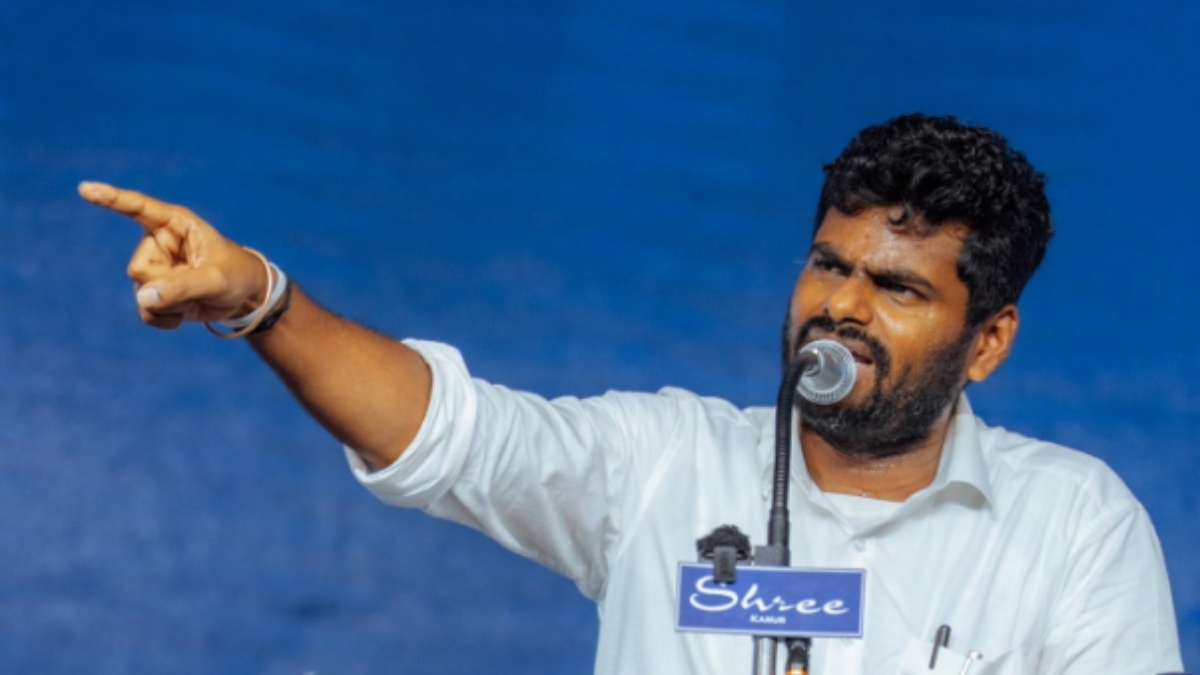
Annamalai said the Assembly elections in 2026 would be a turning point in Tamil Nadu politics and the changes expected by 2031 would further solidify a new political direction. On the other hand, political parties in the state are preparing for the next assembly elections, and campaigns are more and more about governance, development, welfare policies, employment, infrastructure, education, and youth engagement.
Annamalai said that voter expectations are evolving, particularly with younger generations who are looking beyond the traditional political narrative. Issues such as economic development, employment generation, transparent governance, industrial investment, technological advancement and an improved public service are more and more important in shaping electoral decisions, he said.
BJP’s organizational presence in Tamil Nadu is gradually growing. They have never existed in Tamil Nadu at the state level and are not even very popular among the party’s own people. Annamalai is now one of the party’s top-level people in Tamil Nadu who has been speaking at public meetings and meeting voters in different districts.

Tamil Nadu's politics has been dominated by regional parties for generations, especially the Dravidian political movement. The state's political system is mainly affected by social welfare issues (language, education, industrial growth, health care, agriculture) and regional identity. National parties such as BJP are still looking for more electoral acceptance by adapting their strategies to the state's unique political environment.
Political analysts note that predictions about future electoral outcomes are always part and parcel of democratic campaigning. Leaders from different parties may declare their confidence in the ability to win public support, but actual election results are influenced by alliances, campaign effectiveness, governance records, voter turnout and constituency-level dynamics. So predictions about future elections should be seen as political opinions and not fact.
Experts also point out that Tamil Nadu's electorate has always exhibited an independent voting pattern and tend to vote for the parties as a result of state-specific issues, political leadership, policy promises and performance of local government. As a result, elections are therefore generally very competitive and all major political parties want to connect with various layers of society.
The upcoming Assembly election is expected to see a lot of campaigning within the ruling party, opposition parties and new political movements. Issues such as job creation, industrial development, women's welfare, rural infrastructure, urban development, environmental sustainability, public transport, education and so on would dominate political discourse in the months leading to polling.
Political experts also believe that long-term electoral success is predicated on grassroots engagement rather than campaign rhetoric. Local leadership structures, organizational networks, and engagement with voters, credible policy alternatives, and political messaging are key to electoral strategy in a politically influential state like Tamil Nadu.
Annamalai’s remarks have also ignited political debate and party leaders have responded by defending their governance records and challenging the BJP’s electoral claims. Such exchanges are common during election cycles, where parties present different visions of the state’s future and appeal to voters from various camps.
The Election Commission of India will oversee all Assembly elections whenever they are held and ensure that constitutional procedures and the Model Code of Conduct are followed by all political parties during the campaign period. Political parties will continue organizing public meetings, roadshows, policy announcements, and digital outreach with the aim of their political parties in the campaign phase.
The direction of Tamil Nadu’s politics is determined by the electorate, and the political parties in the end, but the voters’ decision will be a determining factor in the political outcome of Tamil Nadu’s future.
The political leadership might be optimistic about future elections but the electorate’s votes will be the most important one as the day of elections will be the most influential one in the state’s governance. With campaigning on the march in the run up to the next Assembly elections, political discourse is expected to become more intense and different parties will have to convince voters through their policy agenda, leadership skills, and vision of Tamil Nadu as a whole.