All the gates of the Salal Dam in Jammu and Kashmir were opened as authorities worked to handle water and to flush sediment out of the reservoir. The move led to a rise in the water level in the Chenab River and strong currents reported downstream.
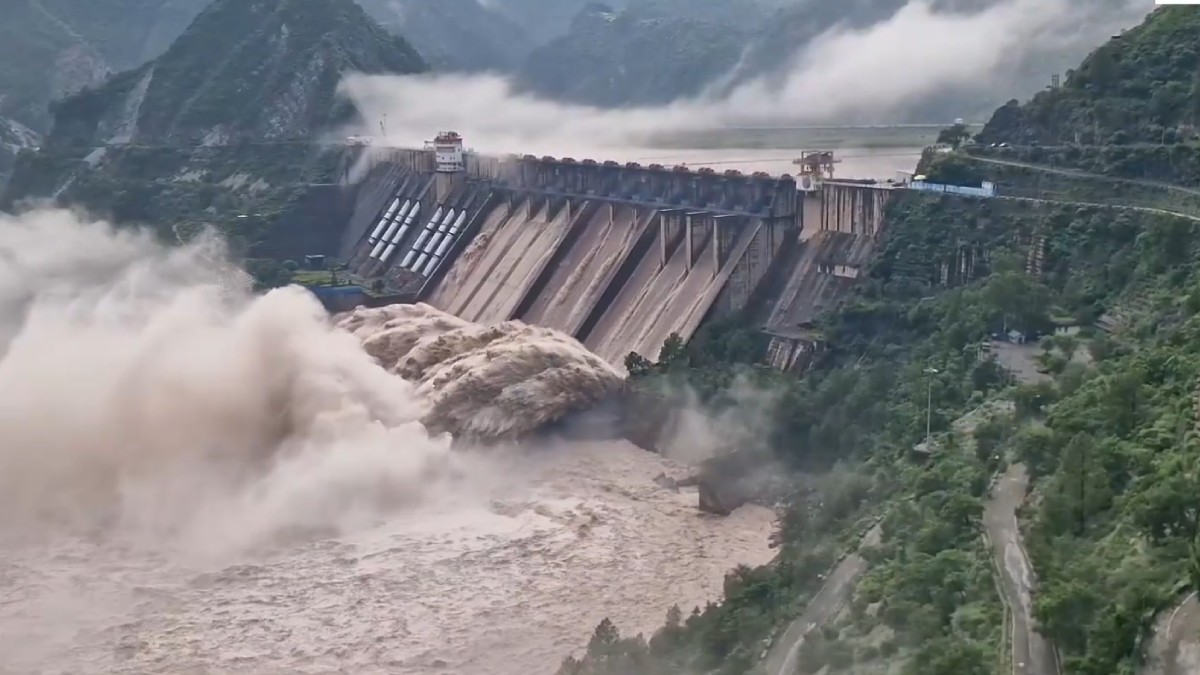
Salal Dam is located on the Chenab River in Reasi district. It is part of the hydropower system in India, and electricity generation is very important in the region.
The latest operation also comes at a time when relations between India and Pakistan are tense over the Indus Waters Treaty.
India has put the Indus Waters Treaty in abeyance after the Pahalgam terror attack in 2025. The Indian government says the treaty will not be published until Pakistan stops supporting cross border terrorism.
Pakistan, on the other hand, rejects India’s stance and says it is still a legally valid and operational treaty.
The opening of the Salal Dam gates has therefore attracted attention because the Chenab is one of the rivers covered by the treaty.
Why were all Salal Dam gates opened?
The gates were opened by authorities during reservoir management and flushing operations. These operations remove sediment from a dam reservoir and can result in a better long-term operation of the project.
The Salal reservoir has accumulated a lot of sediment over the years. The officials are working on ways to get rid of it and develop the hydroelectric process.
In July, when the Salal Dam spillway gates were opened for silt flushing, the Reasi district administration issued an advisory. The administration advised people living near the Chenab River to stay away from the riverbanks because the operation could cause the water level to rise.
Heavy rainfall can also increase the water entering the reservoir.
One previous operation in July saw all gates of the Salal Dam open after heavy rain increased inflows into the reservoir. The release caused the Chenab River to swell and created strong currents downstream.
Flushing water from a reservoir is a key part of dam maintenance. Downstream rivers carry sand, soil and more. As a result, this material will accumulate in a reservoir and decrease the usable capacity over time.
The sediment removal could help to maintain the reservoir and protect power generation equipment.
The Salal Hydroelectric Project has a power capacity of 690 MW and is operated by NHPC. The project is built on the Chenab River in Reasi district and is part of power infrastructure in the region.
A recent operation also highlights the need to monitor the Chenab River after opening dam gates. Sudden increases in downstream water can be dangerous to people in the vicinity of the river.
That is why local authorities give warnings during flushing operations and heavy rainfall.
BIG NEWS 🚨 All gates of the Salal Dam have been opened for flushing, causing the Chenab River’s water level to rise.
— News Algebra (@NewsAlgebraIND) August 20, 2026
With the Indus Waters Treaty in abeyance, India will determine the water flow management, not Pakistan 🔥 pic.twitter.com/mBP7UszObT
What does the Indus Waters Treaty mean for the Chenab?
The Chenab is one of the three western rivers that are covered by the Indus Waters Treaty. The other two are the Indus and the Jhelum. Under the 1960 treaty, Pakistan was given the largest usage of western rivers and India more use of eastern rivers. India also has some rights to use the western rivers for hydropower generation.
The situation is different now as India has put the treaty in abeyance.
The Indian government has said that the treaty will remain in abeyance until Pakistan steps to prevent cross-border terrorism. India has also rejected claims that it deliberately caused recent flooding in Pakistan. The Chenab flows in July were the result of heavy monsoon rainfall in the upper catchment areas, it said.
Pakistan has strongly opposed India’s decision and continues to insist that the treaty is binding.
So water management is a sensitive subject between the two countries.
With the treaty still in limbo from India's point of view, New Delhi has more freedom to govern hydropower infrastructure and reservoir work. But it doesn’t mean that India can immediately stop or control the Chenab flow. The country’s dam infrastructure limits how much water it can store or regulate at any time.
Salal Dam is mainly a run-of-the-river hydropower project. It’s about managing water for power generation and reservoir maintenance in comparison to storing huge amounts of water for a long time.
The latest flushing operation is therefore also connected to the technical needs of the dam.
But the situation has become politically significant because of the larger India-Pakistan dispute over water.
The immediate concern for those in Chenab is safety. Dam gate opening can raise water levels and create strong currents. Residents, tourists, rafters and others have been warned not to approach the river during such operations.
Salal Dam operation also demonstrates how water management has become closely connected with national security and foreign policy between India and Pakistan.
For now, India manages the operation of the Salal Dam and monitors the Chenab River and weather in the area.
The opening of the gates is part of reservoir and sediment management but has taken place against the backdrop of the continuing dispute over the Indus Waters Treaty.
With the monsoon going on, the authorities should monitor rainfall, reservoir levels and downstream flows for public safety.
The Chenab is still an important river to both countries, so every major development around its water flow is of great interest.
India’s position is clear right now. The government considers the Indus Waters Treaty to be in abeyance and has said it will manage its water resources accordingly. Pakistan continues to reject that position.
The Salal Dam operation has a technical and geopolitical significance as well. But for people living along the river, the most important message is simple: stay away from the Chenab when dam gates are open and water levels are rising.