
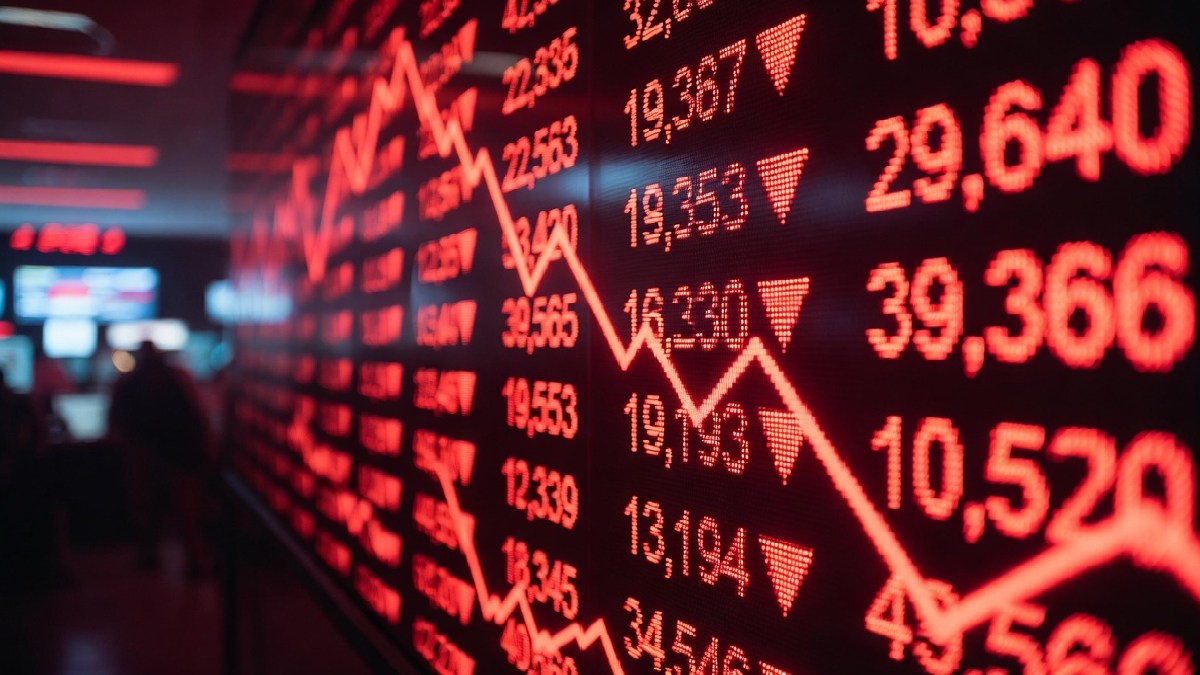
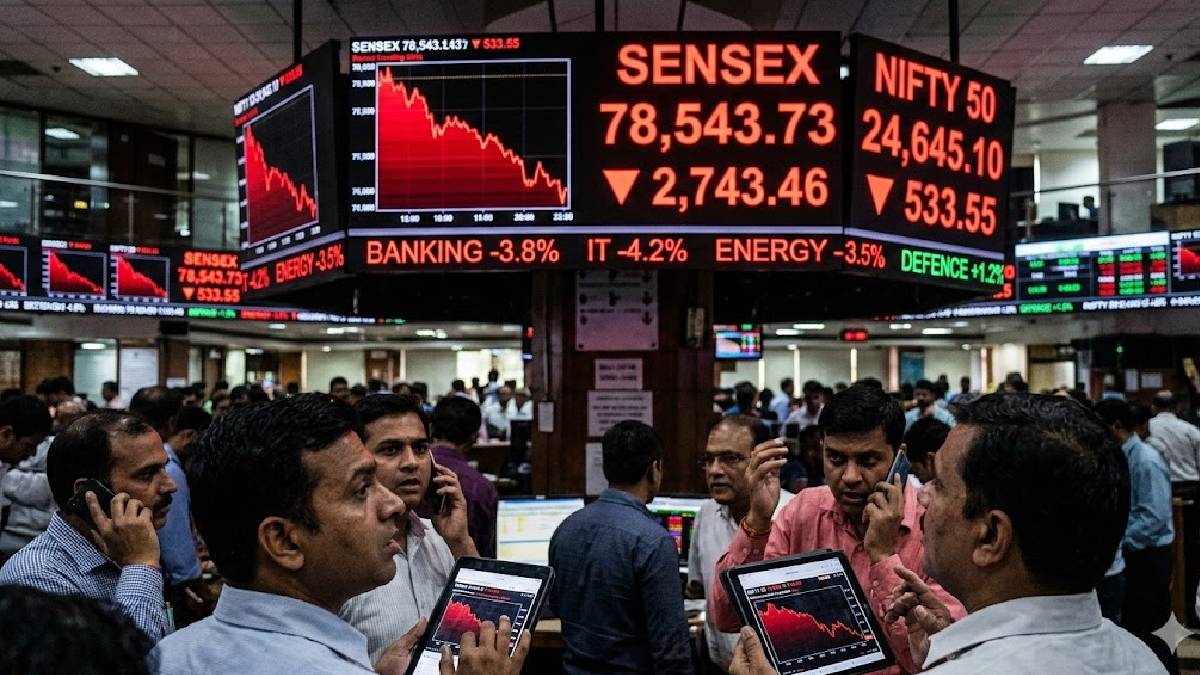
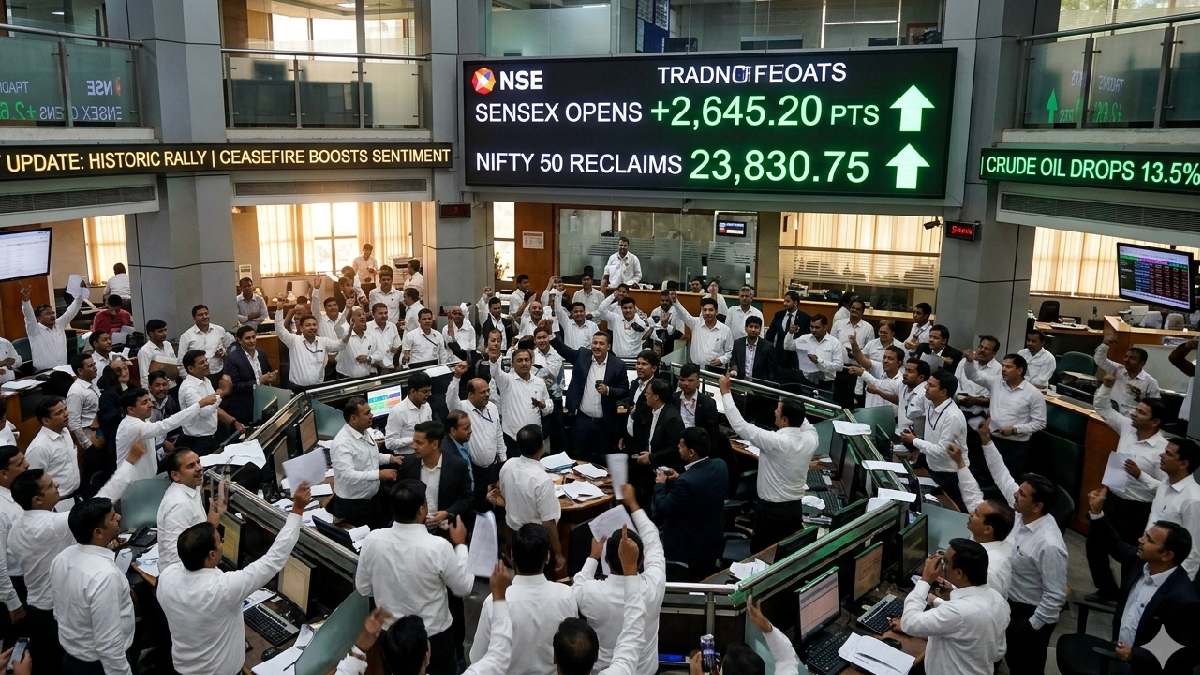
The Indian equity market sank as the BSE Sensex slumped more than 1,310 points and the Nifty 50 traded at a low of under 23,820 points, marking it as one of the most stormy days of the year for a market with a performance like that.
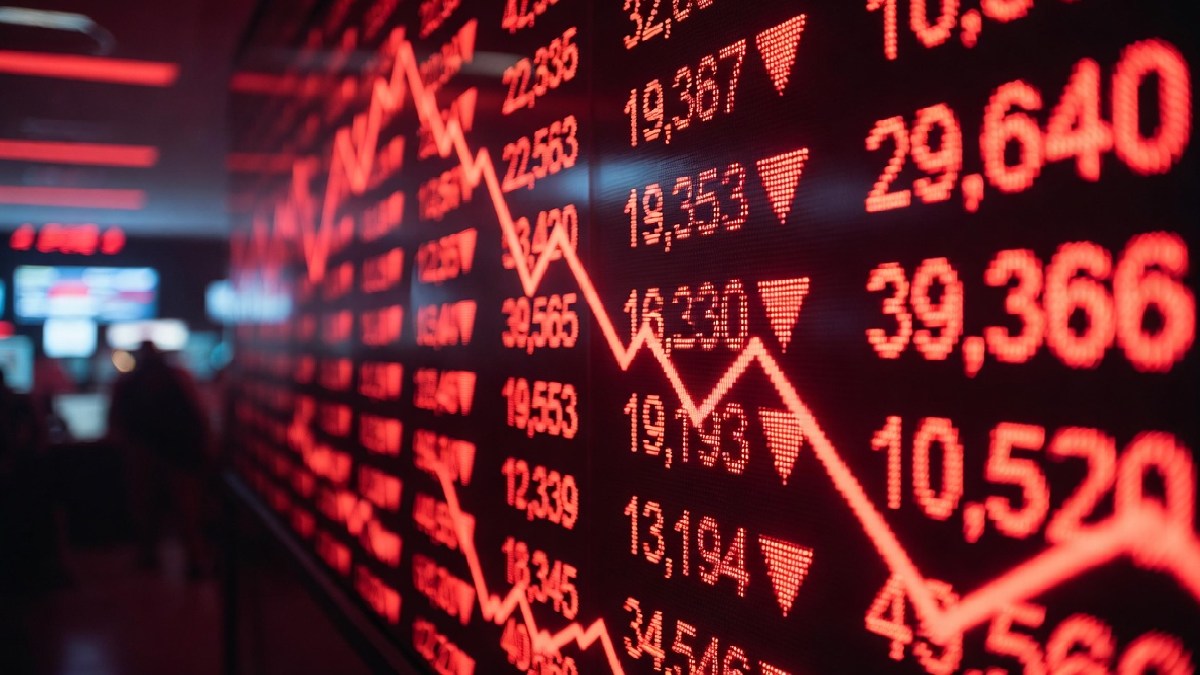
The steep drop has sent markets into panic as selling pressure has engulfed almost every big market sector, banking, IT, auto, metal and financial stocks. It was considered one of the worst single-day declines in weeks by market analysts. The bloodbath on D-Street was said to be a result of a blend of international and domestic nerves.
The market has suffered hits from poor signals from the global market, growing geopolitical tensions, fears of an economic slowdown, and massive foreign institutional investor (FII) selloff. Worries about higher crude oil prices, inflationary concerns and strains on world financial markets had also stoked the wild correction.
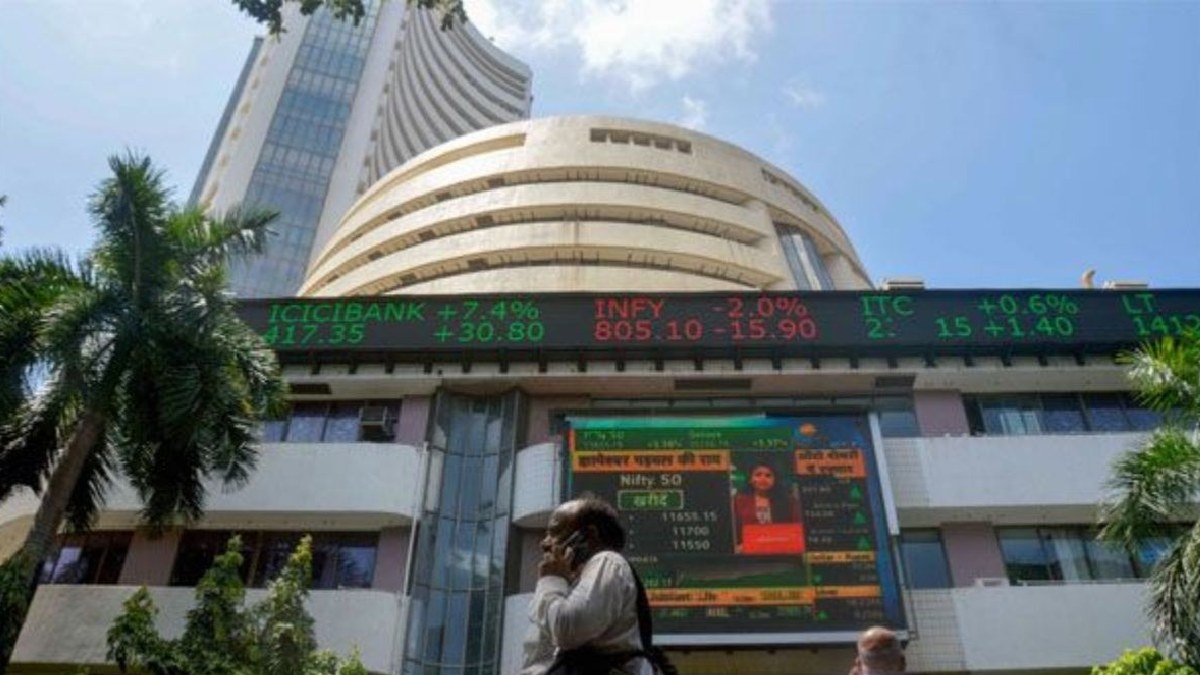
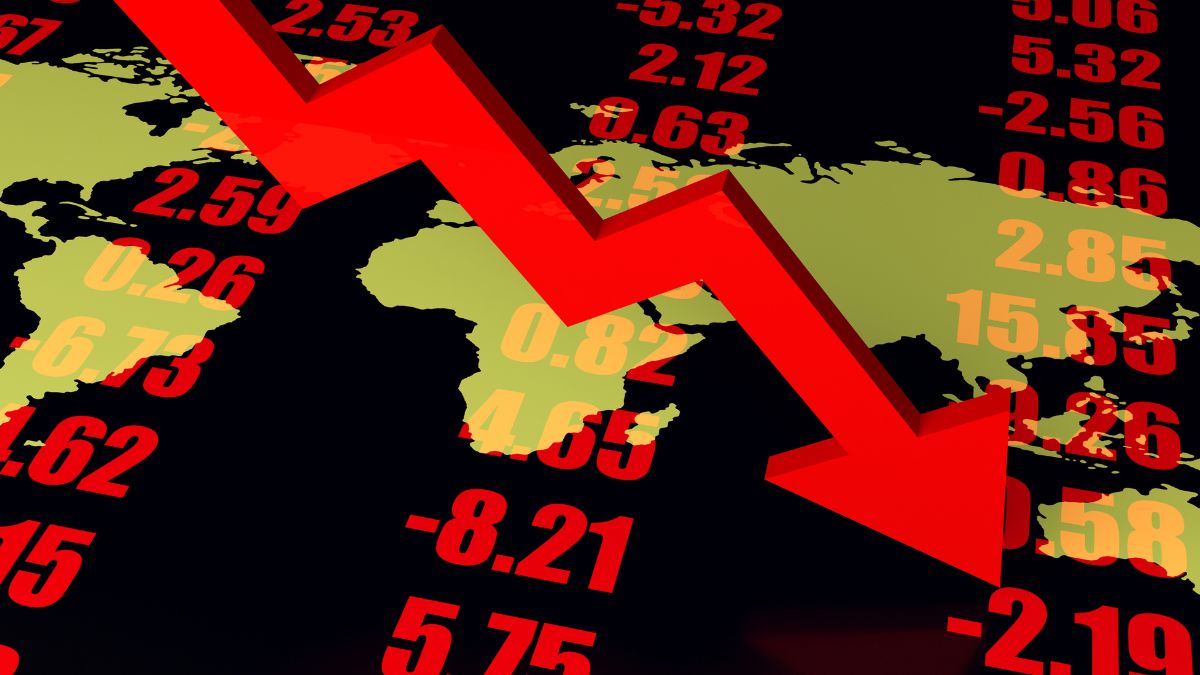
Banking and finance stocks were among the biggest casualties of the trade, pulling the broader markets lower. A handful of big companies sank, liquidating wealth in just a few hours. Other indexes suffered similarly, such as mid-cap and small-cap indexes. The trader says panic selling grew following the breach at the critical levels for technical support benchmarks and exposed even more of the market.
Market volatility spiked late in the day as traders rushed to lock in profits and unwind from higher-risk assets. When global conditions are volatile, a fear-dominated environment tends to magnify downturns, analysts added.
The drop came as investors were already keeping tabs on much of the world’s news closely, be it political instability, uncertainty about global trade, and signals from the world’s major central banks on interest rates and monetary policy. Retail investors have been even more on the alert when they saw the prices of a string of such portfolios plunge deep into the red during trading.

Financial experts told financial analysts that for long-term investors, it was better to avoid panicking and use disciplined investment moves in the choppy times. Overall, investors are betting on selective buying in fundamentally good shares or else on a precipitous downward correction of their own, if markets agree, ultimately, in the days ahead.
That will offer traders and investors plenty of ammunition: the levels of incoming economic data, corporate earnings, or, in the event of global crude oil status, even the actions of foreign funds working in these jurisdictions.
Such a sudden collapse signals a much more telling evidence of how quickly sentiment in markets can switch, or fail, in response to generally acknowledged market uncertainty, at which point panic-stricken investors can stir up significant financial sell-offs, both regional and global.








Comments