The recent Supreme Court decision allowing passive euthanasia for Ghaziabad resident Harish Rana has once again brought the complex debate around end-of-life care and the right to die with dignity into public focus. The ruling has prompted many people to ask an important question: What is the difference between passive euthanasia and active euthanasia?
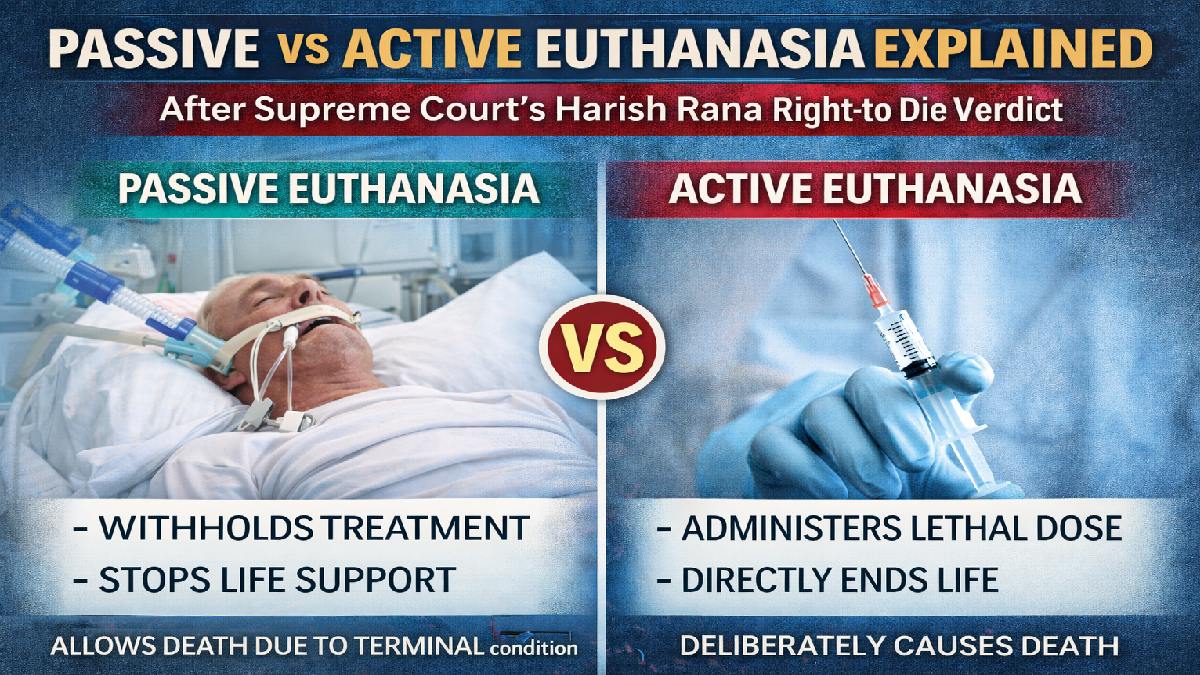
Euthanasia broadly refers to the act of intentionally ending or allowing the end of a person’s life in order to relieve suffering caused by severe or terminal illness. However, euthanasia is generally divided into two categories passive euthanasia and active euthanasia, each with very different legal and ethical implications.
What Is Passive Euthanasia?
Passive euthanasia refers to withholding or withdrawing life-sustaining medical treatment that keeps a patient alive when there is no hope of recovery. Instead of actively causing death, doctors stop interventions that artificially prolong life.
Examples of passive euthanasia include removing a patient from a ventilator, stopping artificial feeding through tubes, or discontinuing medications that keep vital organs functioning. Once such support is withdrawn, the patient may pass away naturally due to the underlying medical condition.
In India, passive euthanasia is legal under strict guidelines set by the Supreme Court. In a landmark 2018 judgment, the court recognized the right to die with dignity as part of the fundamental right to life under Article 21 of the Constitution. The ruling also allowed individuals to create “living wills,” which state their wishes regarding medical treatment if they become terminally ill and unable to communicate their decisions.

The Supreme Court’s decision in the Harish Rana case followed these guidelines, allowing doctors to withdraw life support after reviewing medical reports and confirming that the patient’s condition was irreversible.
What Is Active Euthanasia?
Active euthanasia, on the other hand, involves deliberately taking steps to end a patient’s life, usually by administering a lethal injection or medication. In this case, death is caused directly by a medical intervention rather than by stopping treatment.
Active euthanasia is highly controversial and remains illegal in India. Many countries also prohibit it because of ethical concerns, including the possibility of misuse, pressure on vulnerable patients, and moral debates about whether doctors should actively cause death.
However, a few countries such as the Netherlands, Belgium, and Canada have legalized forms of active euthanasia or assisted dying under very strict conditions.
Why the Debate Continues
The issue of euthanasia raises complex questions about medical ethics, human dignity, religious beliefs, and patient autonomy. Supporters argue that terminally ill patients should have the right to avoid prolonged suffering, while critics worry about potential abuse and the moral implications of ending life intentionally.
The Harish Rana verdict has once again highlighted the importance of discussing living wills, palliative care, and patient rights in India. As medical technology continues to advance, more patients are able to survive longer with life-support systems, making end-of-life decisions increasingly important for families and healthcare professionals.
While passive euthanasia is now recognized within India’s legal framework, the debate over euthanasia and assisted dying is likely to continue as society balances compassion, ethics, and the value of human life.