NASA's Nancy Grace Roman Space Telescope is on the way to providing astronomers with new views of the universe.
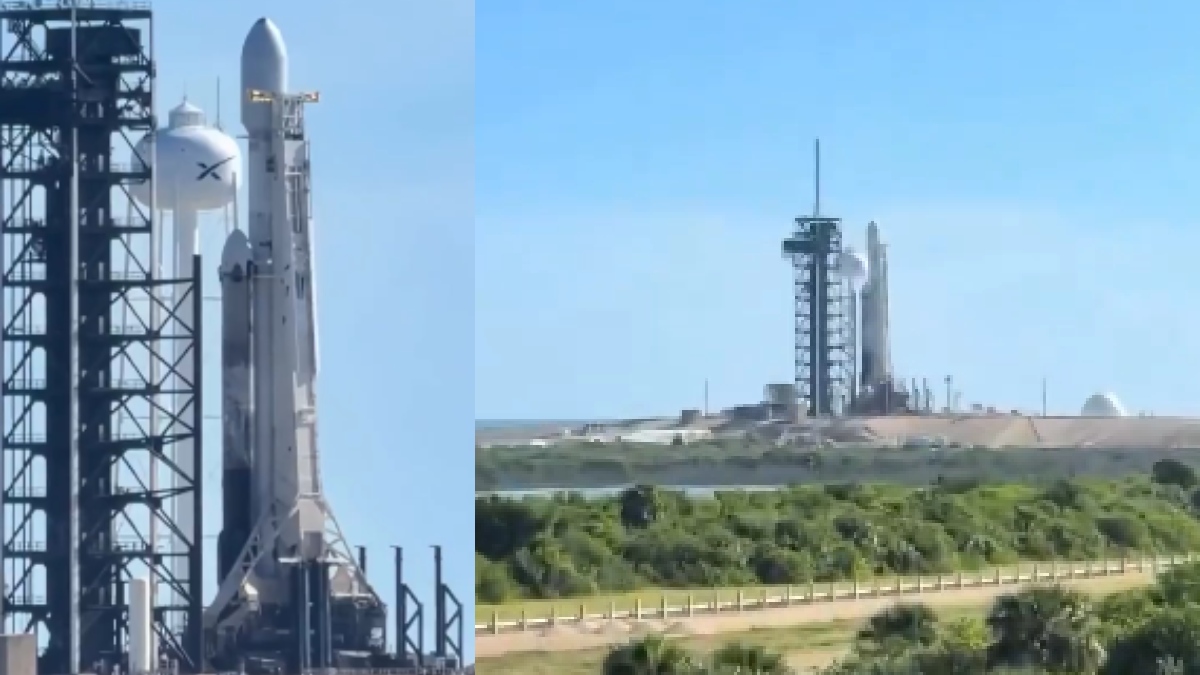
With sophisticated imaging combined with a wide field of view, Roman will see a region of the sky that is 100 times larger than the Hubble Space Telescope can take in a single image.
The difference is mainly from Roman's Wide Field Instrument. Whereas Hubble and Roman have similarly sized primary mirrors, Roman's camera is designed to cover a much larger portion of the sky at once.
Scientists can survey big parts of space much more quickly instead of just one tiny area at a time.
A Wider Window Into Space
Hubble has changed astronomy with its detailed images of galaxies, nebulae, stars and other distant objects. Yet its small field of view means that large surveys of the sky could take a lot of time.
Roman is being built with a different approach in mind. Its wide-angle capabilities will enable researchers to map huge sections of the universe efficiently. NASA estimates that Roman could survey the sky up to 1,000 times faster than Hubble for some comparable observations.
This capability will be especially useful to study how the universe has changed over billions of years.
Investigating Dark Energy and Dark Matter
Roman has one of the major scientific aims, which is to investigate dark energy; dark energy is what is driving the universe’s rapid expansion.
With millions of galaxies and far away supernovae in the picture, we can build detailed maps of structures in the universe and follow the expansion of the universe over time. This kind of data could shed light on both dark energy and dark matter.
Roman will also search for planets beyond our solar system. With gravitational microlensing, the telescope will track large numbers of stars and look for tiny changes in light caused by planets passing in front of distant background stars.
This method may reveal worlds that are difficult to find with traditional planet-hunting methods.
Roman Won’t Replace Hubble
Although impressive in its capabilities, Roman is not meant to replace Hubble. The two space telescopes are expected to complement one another.
Roman will be particularly useful for large-scale surveys, to find objects and map huge areas of the sky. Hubble, too, can provide detailed observations of selected targets, especially in visible and ultraviolet wavelengths.
Roman will also work alongside NASA’s James Webb Space Telescope. Scientists can use Roman’s broad surveys to find promising targets and then use Webb to make deeper infrared observations.
The Roman Space Telescope is going to change the way scientists study the universe with its high resolution and wide field of view.
Instead of observing small clusters of galaxies, stars, and planets only, astronomers will be able to investigate massive populations of galaxies, stars, and planets and look for patterns that reveal how the universe works.
With Roman beginning its scientific mission, astronomers will be looking at vast amounts of new data that could help answer some of the biggest questions in modern astronomy.