Bengaluru has seen an extraordinary weather event, and it has had its hottest July temperature in more than a century in the city. On July 14, the city had the highest temperature ever in the city - 33.6 degrees Celsius, breaking a long-standing temperature record and marking the hottest day in Bengaluru in 112 years. The high temperature is because of the weakening of the southwest monsoon, which has reduced rainfall activity throughout Karnataka.
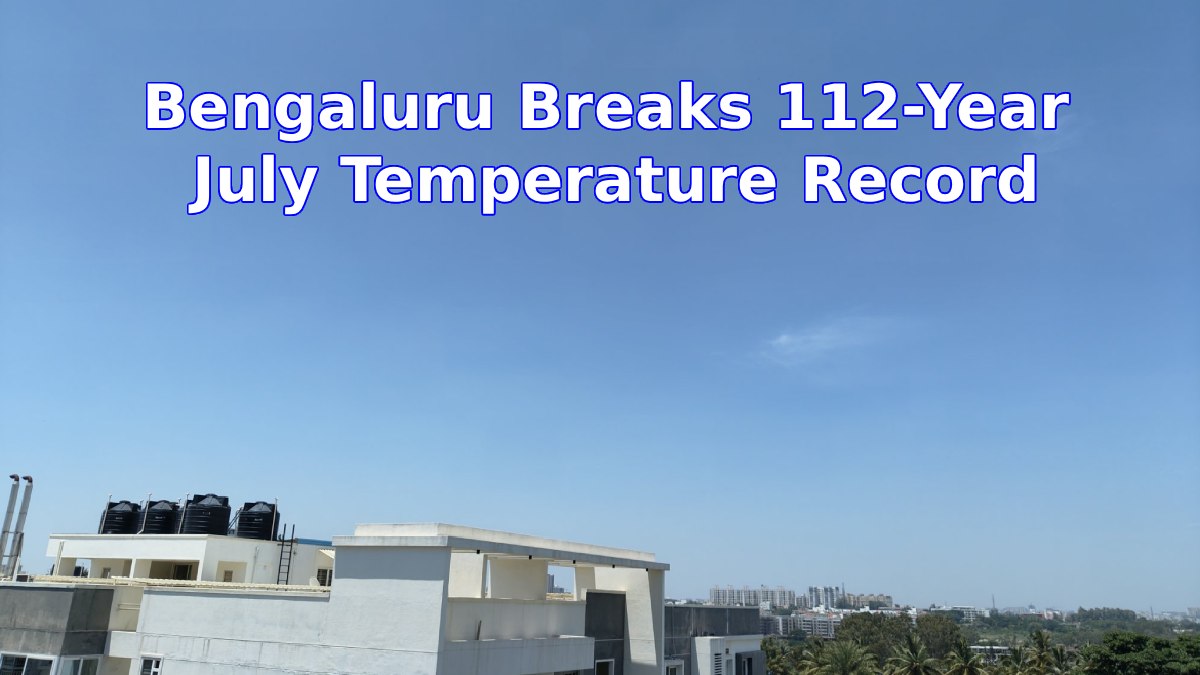
According to data from the India Meteorological Department (IMD), the previous highest July temperature recorded in Bengaluru was 33.3 degrees Celsius in 1914 and 1926. With Tuesday's temperature touching 33.6 degrees Celsius, the city has now surpassed a record that stood for over a century.
The discovery surprised weather experts and residents alike as Bengaluru has long been known for its moderate and pleasant climate, particularly during the monsoon season. July is usually characterised by regular rainfall and cloudy, cool weather. Still, the weather is very different this year.
The weather data shows that Bengaluru’s normal maximum temperature for July is about 28.3 degrees Celsius. The recent reading is more than 5 degrees Celsius above the seasonal average, illustrating the severity of the current weather anomaly.
The temperature surge is not limited to Bengaluru alone. Temperature levels are 3 to 4 degrees Celsius above normal in many districts in Karnataka. The southwest monsoon has weakened, weather experts say, and less cloud cover and less rainfall have allowed more solar radiation to reach the surface, resulting in higher ground temperatures.

The weakening monsoon has also made many parts of Karnataka dry, especially in the northern interior districts. Dry weather in some areas in the coming days may also contribute to higher temperatures, meteorologists say.
The temperature in Karnataka could increase by 3 to 5 degrees Celsius from July 15 to July 19, the India Meteorological Department has warned. Such a forecast has worried health professionals, farmers, and urban planners in various parts of the state, given that there is also a persistent rainfall deficit.
ಬಿಸಿ ಗಾಳಿ & ತೇವಾಂಶ ಎಚ್ಚರಿಕೆ.
— Karnataka State Natural Disaster Monitoring Centre (@KarnatakaSNDMC) July 15, 2026
HOT AND HUMID #Warning for COASTAL #KARNATAKA #Yellow #Alert@KarnatakaVarthe #KSNDMC pic.twitter.com/RPlGfzQIXY
The IMD has issued a Yellow Alert for the coastal districts of Karnataka for hot and humid weather. Coastal residents could experience higher discomfort with increased humidity and higher temperatures, creating heat stress conditions.
The weather pattern is also worrying for agriculture. Karnataka's farming sector depends on the southwest monsoon for crop production. Long-term rainfall shortages might affect the development of the farming industry due to the lack of rainfall, impacting crop growth and water availability in agricultural areas. Monsoon developments are being closely monitored to see how this will affect food production and water resources in the future, raising concerns among agricultural producers.
Environmental analysts say extreme weather events are more common in many parts of India. While individual weather events are not necessarily linked to climate change, scientists have observed a growing trend of temperature extremes, erratic rainfall patterns, and changing seasonal behaviour over the last few decades.
For Bengaluru residents, the record-breaking heat has been an unusual reminder of how weather patterns can change significantly. Many have reported increased use of fans, air conditioners, and cooling appliances, while health officials have advised the public to stay hydrated, avoid prolonged exposure to direct sunlight during peak afternoon hours, and take precautions against heat-related illnesses.
Karnataka has been experiencing weakened monsoon conditions, and meteorologists will be closely monitoring rainfall activity in the coming weeks. If the southwest monsoon regains strength, it could determine not only future temperatures but also the broader impact on agriculture, water resources, and daily life across the state.