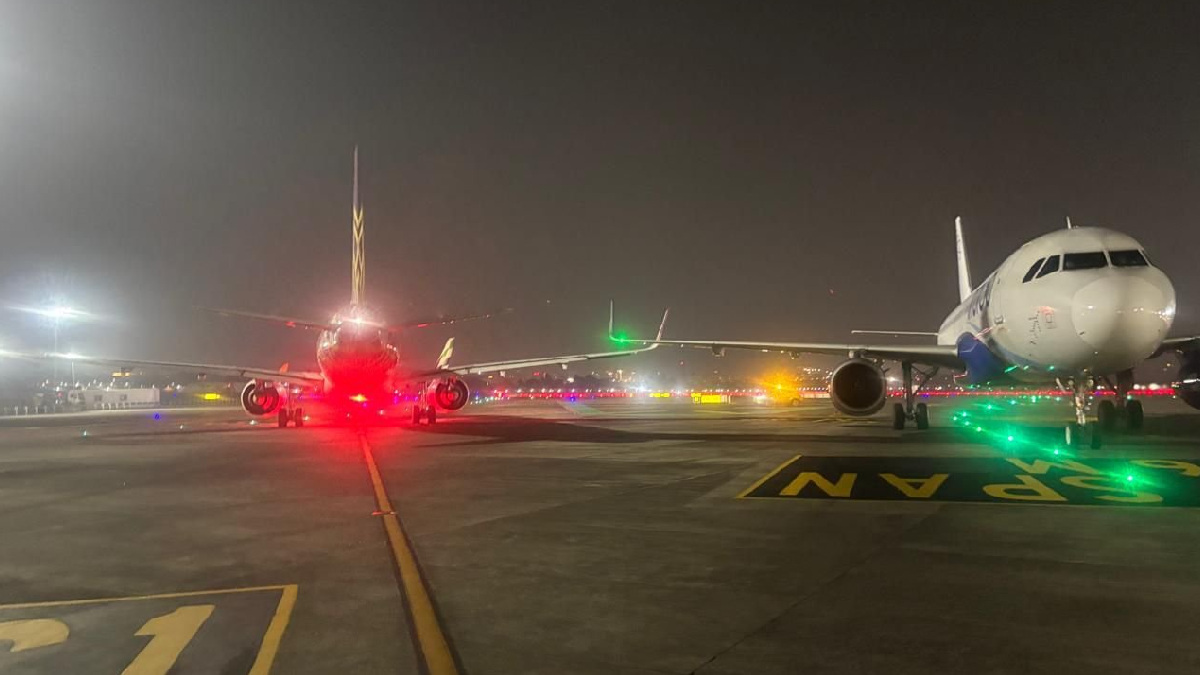
And panic and quick crisis management was in full bloom on Monday afternoon when an IndiGo flight from Dubai to Mumbai was forced to divert to Gujarat’s Rajkot International Airport. An unscheduled landing was triggered as a smoke warning was detected in the aircraft’s cargo hold area, and aviation authorities declared a full emergency and mobilized safety protocols across the facility.
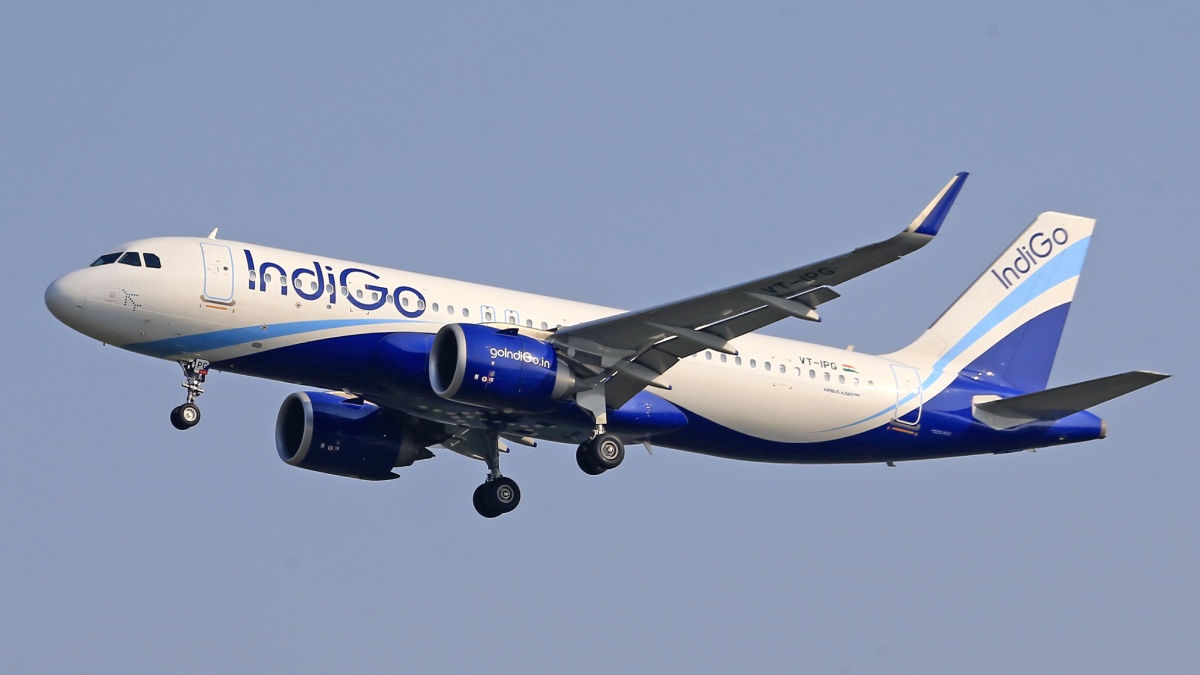
According to airport authorities, IndiGo flight 6E-1452 was operated using an Airbus A321 aircraft, and had 194 passengers and crew members on board. The cockpit crew noticed the suspected smoke alert while flying to their destination and immediately contacted Air Traffic Control (ATC) to request priority clearance and a safe diversion route.
Rajkot airport management declared a full emergency at 2:45 PM. Emergency procedures were immediately initiated with fire tenders, ambulances, rescue vehicles and medical disaster response teams deployed on the tarmac to prevent any potential risks on landing. With professional skill under pressure, the pilot successfully guided the aircraft down for a safe landing at 3:27 PM.
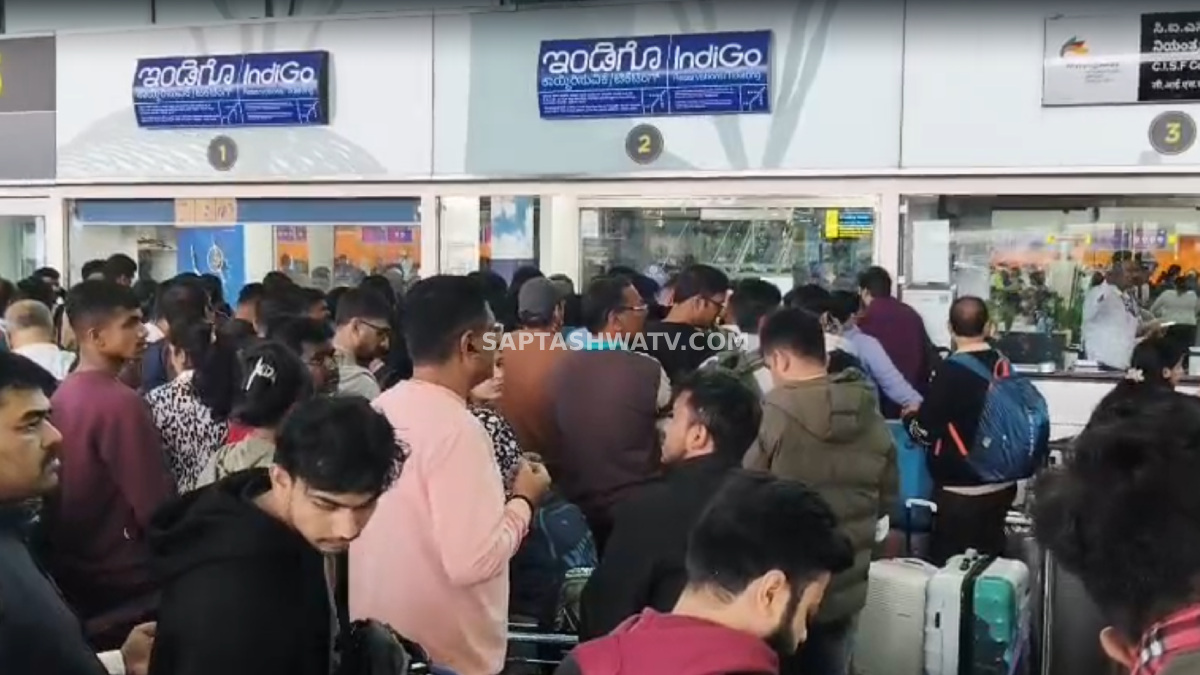
Rajkot Airport Director Diganta Borah confirmed that all 194 passengers on board were evacuated safely via emergency stairs and airbridges without any injuries. As the airport’s terminal infrastructure doesn’t usually handle regular commercial international flights— traditional customs and immigration clearance facilities are limited— passengers were comfortably housed in the international terminal’s arrival hall and alternative travel arrangements were put in place.
Technical staff, airline engineers and safety inspectors immediately cordoned off the Airbus A321 to investigate the cause of the cargo compartment smoke warning and uncover what exactly was detected. Meanwhile, the stranded passengers were put on a replacement plane from Mumbai to Mumbai to carry them to the destination the following evening. Aviation safety professionals have praised the quick response of the flight deck crew and ground air traffic controllers to the situation, and the quick response to the situation averted the disaster from deteriorating into a major mid-air disaster.