Congress leader and Leader of Opposition in Lok Sabha Rahul Gandhi became centre of attention on Tuesday after he climbed atop a police barricade during an INDIA bloc protest march in Delhi.
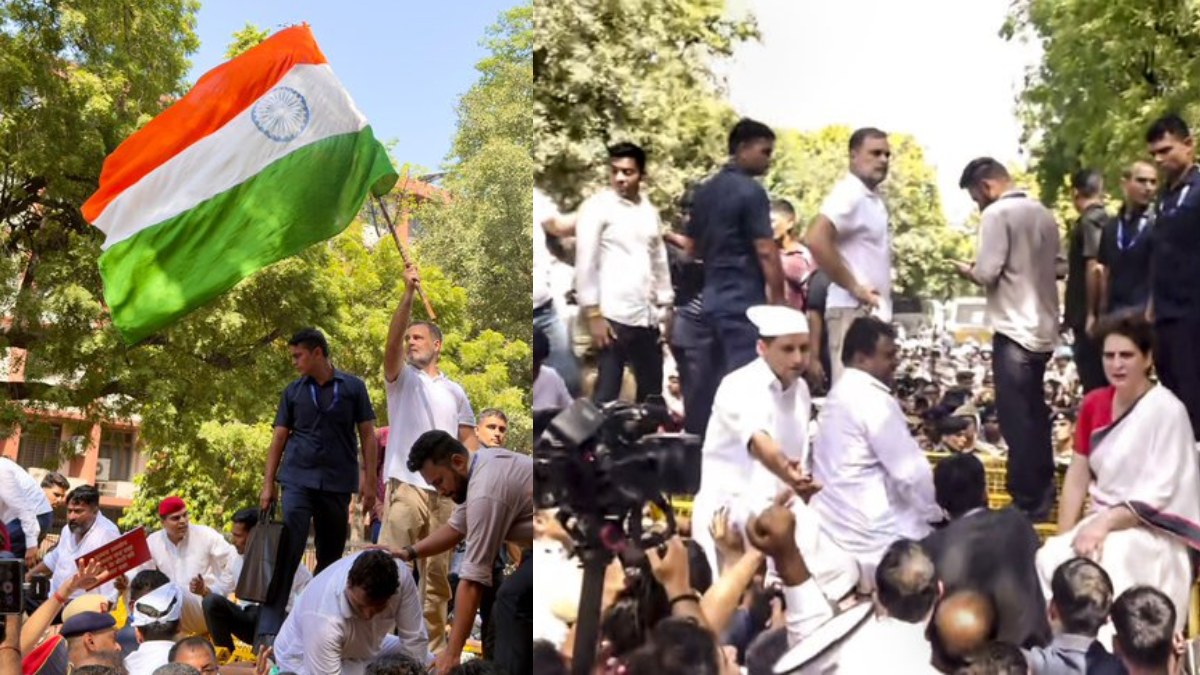
Opposition legislators had tried to march to the Election Commission of India headquarters from Parliament to demand Chief Election Commissioner Gyanesh Kumar’s resignation as security forces stopped the march. Gandhi’s Tricolour waving in the background of the protest was a stunning image that became a major topic of conversation.
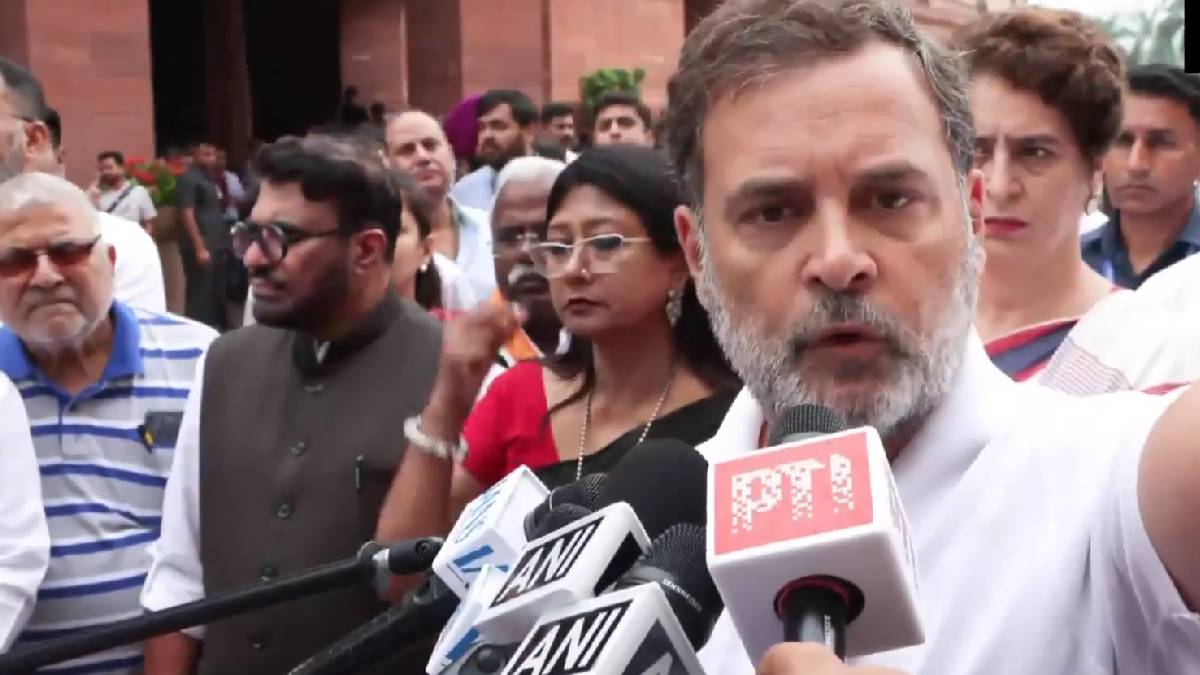
The INDIA bloc march started from Parliament and moved towards Nirvachan Sadan, which is the headquarters of the Election Commission. The opposition parties are protesting against the Special Intensive Revision of electoral rolls and have accused the Election Commission of irregularities in the process. The main demand of the demonstrators at the rally was the resignation of CEC Gyanesh Kumar.
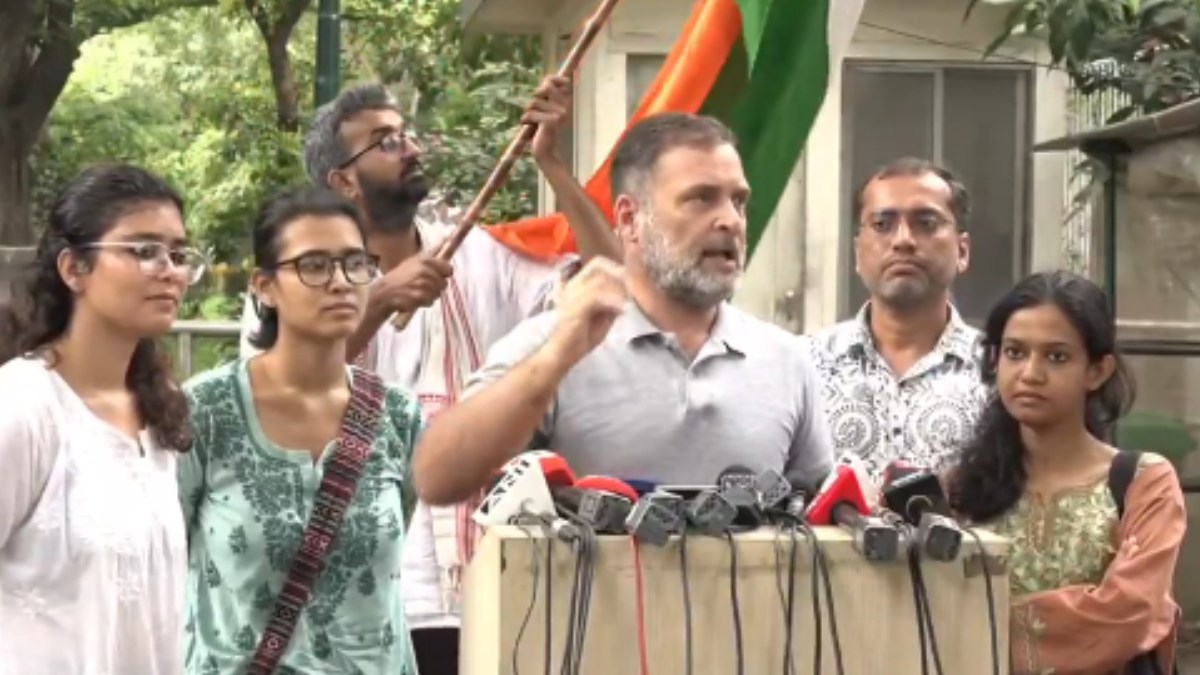
The march was stopped by security personnel near the NITI Aayog office in Parliament Street. Heavy barricading had been put in place along the route leading towards the Election Commission headquarters. When the protesters were prevented from moving forward, a number of opposition MPs sat on the road and conducted a sit-in. Rahul Gandhi and Trinamool Congress leader Abhishek Banerjee climbed up on a police barricade, and Gandhi waved the national flag.
Gandhi’s image of himself standing on top of the barricade was among the most striking images of the day’s political tension. The act is something that the opposition could see as being a gesture of resistance to what they see as limitations on their protest. At the same time, critics could see it as political theatre designed to get people’s attention. But it’s impossible to tell if the act was meant to generate media coverage just from the visuals.
The question of media attention is still likely to be part of the political conversation. The mainstream political protests are becoming all about visuals and images and videos in the mass media and on social networks. A dramatic act such as climbing a barricade is very powerful and can be prominent in news coverage and online discussions. The scene has so far given the INDIA bloc protest a very recognisable image well beyond the immediate gathering in central Delhi.
Gandhi also made use of social media to reinforce the protest’s political message. In a post on X, he addressed Gyanesh Kumar directly, writing: “Gyanesh, it’s done, bro. Time to resign.” The slogan became another major part of the protest and reflected the opposition’s campaign to keep pressure on the Election Commission.
A confrontation continued at the end of the day, and Rahul Gandhi and Priyanka Gandhi Vadra were detained by Delhi police. They also arrested several other INDIA bloc leaders and parliamentarians after the march was halted, according to reports. The meeting was attended by leaders from several opposition parties, and it just solidified the way the INDIA bloc is trying to portray the issue as a collective opposition campaign rather than a Congress-only protest.
The political background of the protests is the Special Intensive Revision of electoral rolls and disagreements over the Election Commission's handling of voter registration procedures. Legal action on Form 6 - the application for voter enrolment - has increased the heat. Opposition parties have raised questions about the process, while the Election Commission has defended its procedures and denied partisan activity.
Rahul Gandhi’s barricade-climbing incident adds to his street-level political campaigning in recent years an ever more visual touch point. Whether it helps the opposition’s political message or distracts from the real electoral issues remains to be decided. What is clear is that the picture of the Leader of the Opposition on a police barricade with the Tricolour has emerged as one of the most influential moments from the latest protest in India.
The incident therefore begs the question: was Gandhi's dramatic move primarily a symbolic act of protest, an attempt to physically challenge the barricades, or just a moment that happened to generate enormous media attention? What we know of the situation is that it did happen, but it can’t be the very reason he did it. The political struggle over the Election Commission, voter list revision and the opposition’s demand for the resignation of the CEC is the main reason behind the march.