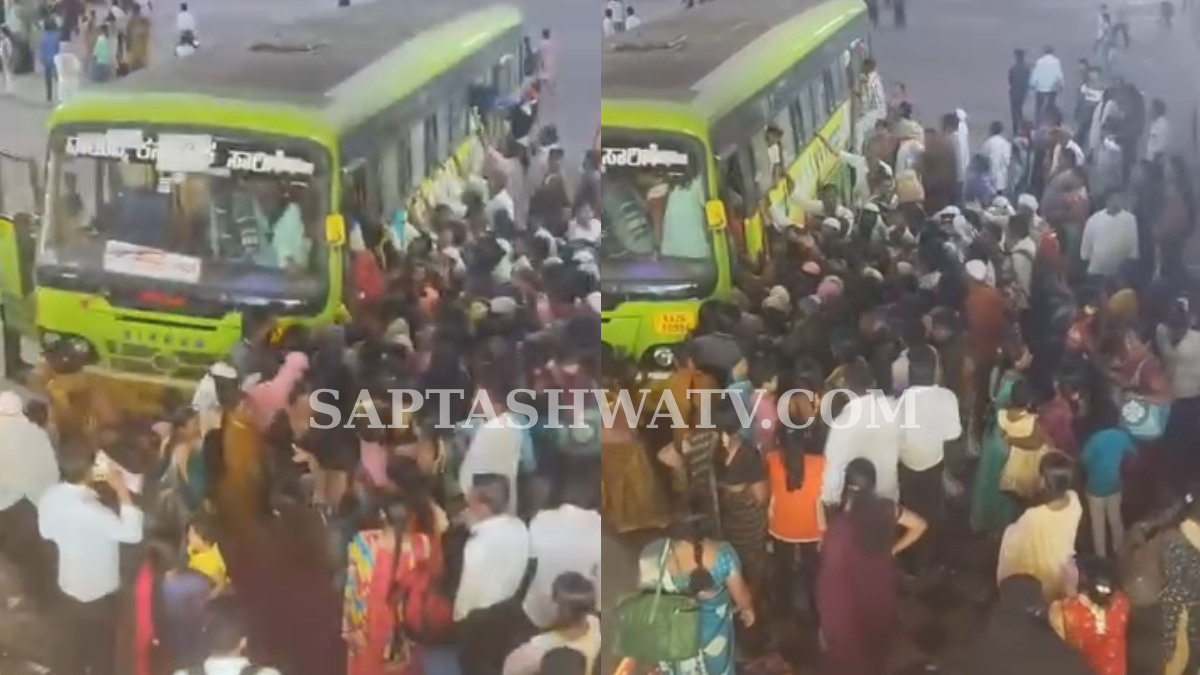
The implementation of the Karnataka government's 'Shakti' scheme, which grants free bus travel for women across the state, has led to significant operational challenges and overcrowding, particularly in district bus stations. A recent incident at the Haveri Central Bus Stand highlighted the intense struggle faced by daily commuters, especially men, who are finding it increasingly difficult to secure seats on intercity buses due to the massive surge in ridership.
Chaos and Scramble at Haveri Bus Stand
The chaos witnessed at the Haveri Central Bus Stand is a clear example of the strain on the public transport system. Visuals from the station showed desperate passengers scrambling to board buses bound for destinations like Gadag. With buses arriving already filled or quickly being occupied by a larger volume of female travelers, male passengers were left resorting to extreme measures to secure a spot. Reports indicated that men were climbing through bus windows to reserve seats before the buses could pull into the designated stops, showcasing their desperation to avoid long waits and reach their destinations on time.
The Immediate Cause: Free Travel for Women
The root of this massive overcrowding lies directly with the success and popularity of the 'Shakti' scheme. While the scheme is a massive welfare measure aimed at empowering women and saving their travel expenses, the state-run Road Transport Corporations (RTCs) have not been able to scale up the fleet or service frequency to match the resulting exponential rise in demand. The huge influx of women utilizing the free travel benefit has severely reduced the availability of comfortable seating for other passengers, leading to daily commuter frustration, delays, and safety concerns arising from the heavy rush.
Demand for Increased Bus Fleet
Commuters and local residents at the Haveri station have loudly voiced their frustration and directed their demand to the state government and the transport authorities. They emphasize that while the 'Shakti' scheme is appreciated, the government must immediately increase the number of buses and the frequency of service, especially on high-demand routes like Haveri to Gadag. The current infrastructure is proving insufficient to handle the dual burden of pre-existing passenger loads and the new surge of free riders, necessitating urgent capacity augmentation to restore order and comfort in public travel.