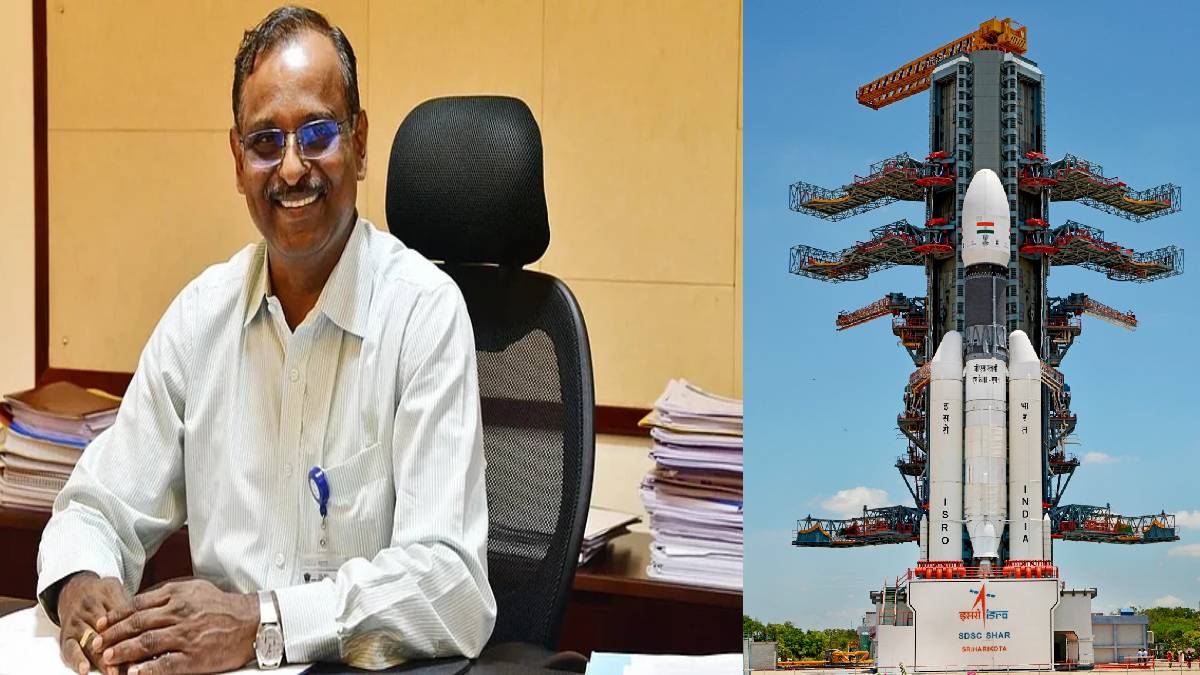
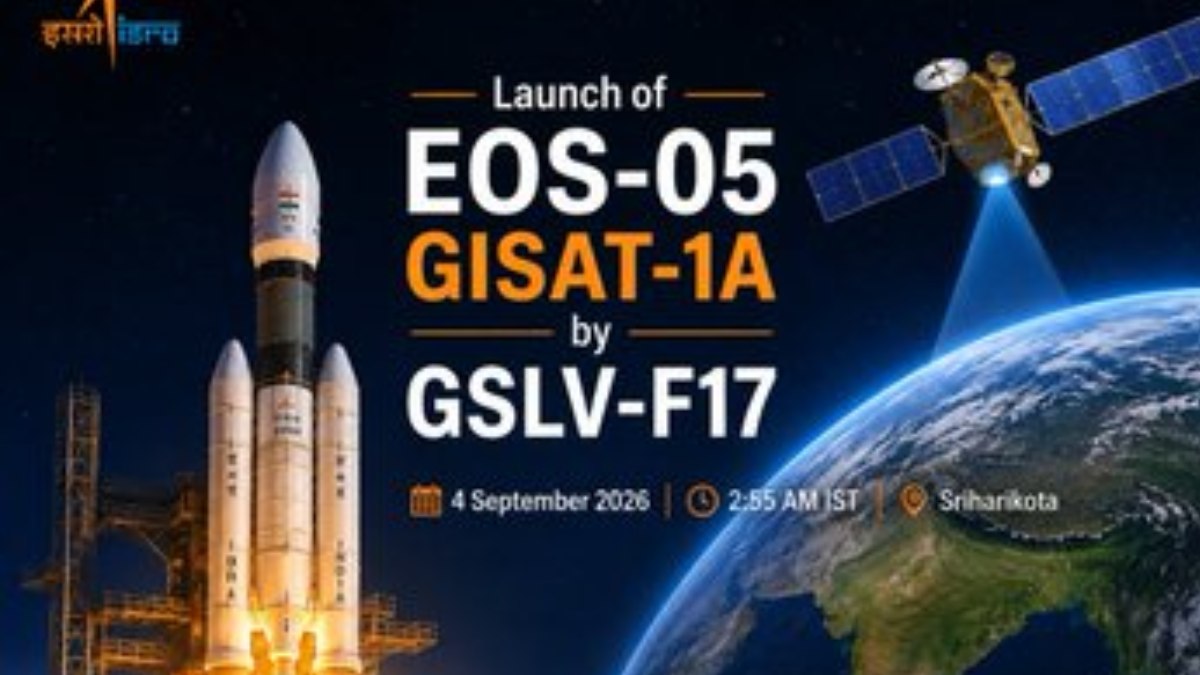
India is set to mark another landmark in its space programme with the launch of the Advanced Earth Observation Satellite-05 (EOS-05) on 4 September with the GSLV-F17 rocket on its way. The announcement came after ISRO Chief V Narayanan visited the Tirumala temple and pointed out a mission which will enhance India’s ability to monitor Earth from satellites.
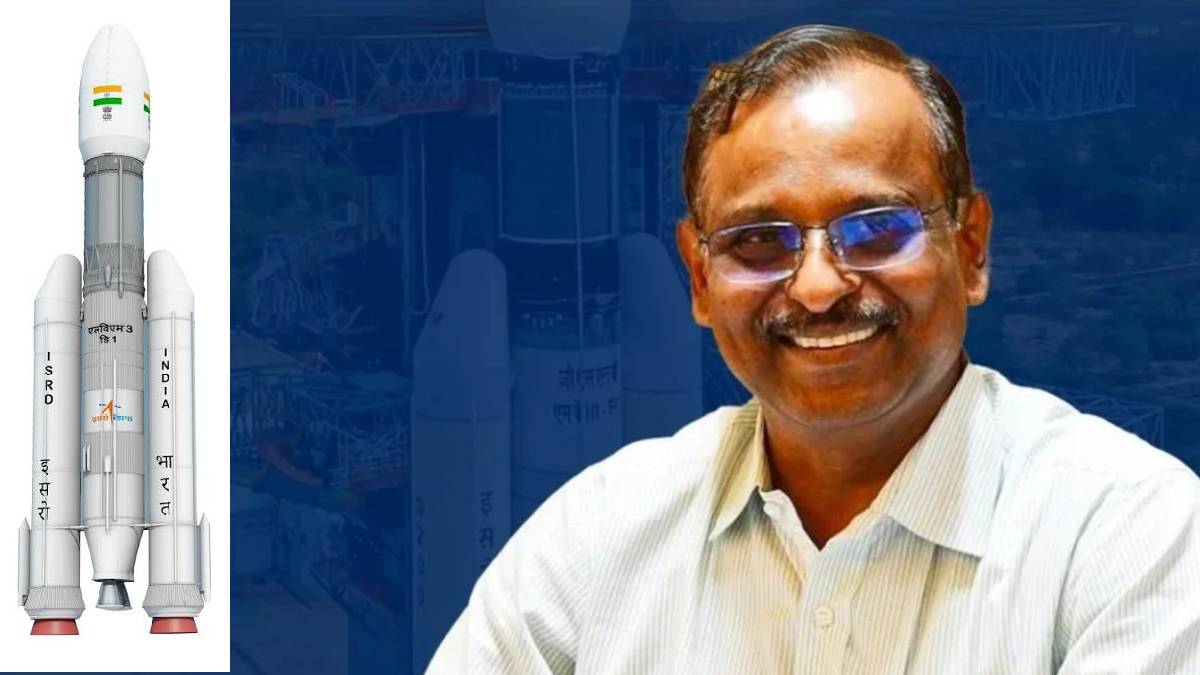
Narayanan said that the upcoming mission will be very important as the Advanced Earth Observation Satellite-05 will be India’s first Earth observation satellite to be placed on a Geostationary Earth Orbit (GEO) platform. It is also a major step towards the growing country being able to monitor Earth from a high-altitude orbital position.
The launch is planned using the Geosynchronous Satellite Launch Vehicle-F17 (GSLV-F17), one of the most important launch vehicles used in India to put heavier satellites in the orbits of geosynchronous and geostationary satellites. The GSLV has been instrumental in India’s development of independent launch capabilities for communication, meteorological and Earth-observation missions.
Earth observation satellites are useful for many other uses. The knowledge from such spacecraft can be used for agriculture, disaster management, environmental monitoring, urban planning, water resource management and infrastructure development. Satellite imagery and related satellite observations can also help in monitoring changes on the Earth’s surface that affect the surface and help to respond to natural disasters.
The importance of the EOS-05 mission is not just the launch itself. An Earth observation satellite in GEO can remain in view of large parts of the Earth. Unlike satellites that are in a lower or polar orbit and repeatedly pass over a particular area, a geostationary satellite remains in the same position relative to the planet as it rotates. This makes the orbit very important for applications that require continuous or frequent observation.
“Advanced Earth Observation Satellite-05 aboard GSLV-F17 to be launched on Sept 4; will be India's first in GEO platform.”
— News Arena India (@NewsArenaIndia) September 2, 2026
- ISRO Chief V Narayanan after visiting Tirumala temple pic.twitter.com/peYmrD4mMy
The September 4 mission is also another indication of India’s growing space capabilities. The Indian Space Research Organisation has expanded its activities across launch vehicles, Earth observation, navigation, communications, planetary exploration and human spaceflight programmes over the last several years.
The use of the GSLV-F17 for the EOS-05 mission underlines the need for India's indigenous launch infrastructure. The development of domestic launch vehicles allows India to reduce dependency on foreign launch services and make it more agile in launching strategic and civilian satellites.
Narayanan made his announcement during his visit to the Tirumala temple, where he offered prayers before highlighting the upcoming mission. As the launch date is coming closer, we will now focus on final preparations, launch-readiness activities and the performance of the GSLV-F17 during its mission.
For India’s space sector, the EOS-05 launch will be one more important step in the expanding Earth observation programme. In the future, as satellite data is increasingly important for governance, climate monitoring, agriculture and disaster response, the advanced orbital platforms are expected to play an increasingly important role.
The September 4 launch will therefore be closely watched by the country's scientific and space community. If successful, it will add another big asset to India’s growing satellite fleet and show the country’s capability to deploy sophisticated Earth observation technology using its own launch vehicle.
With the Advanced Earth Observation Satellite-05 and GSLV-F17 missions going to take place within the next few years, India is preparing for yet another important space milestone, and ISRO is also the leading agency in building space infrastructure and providing satellite-based services for national development.