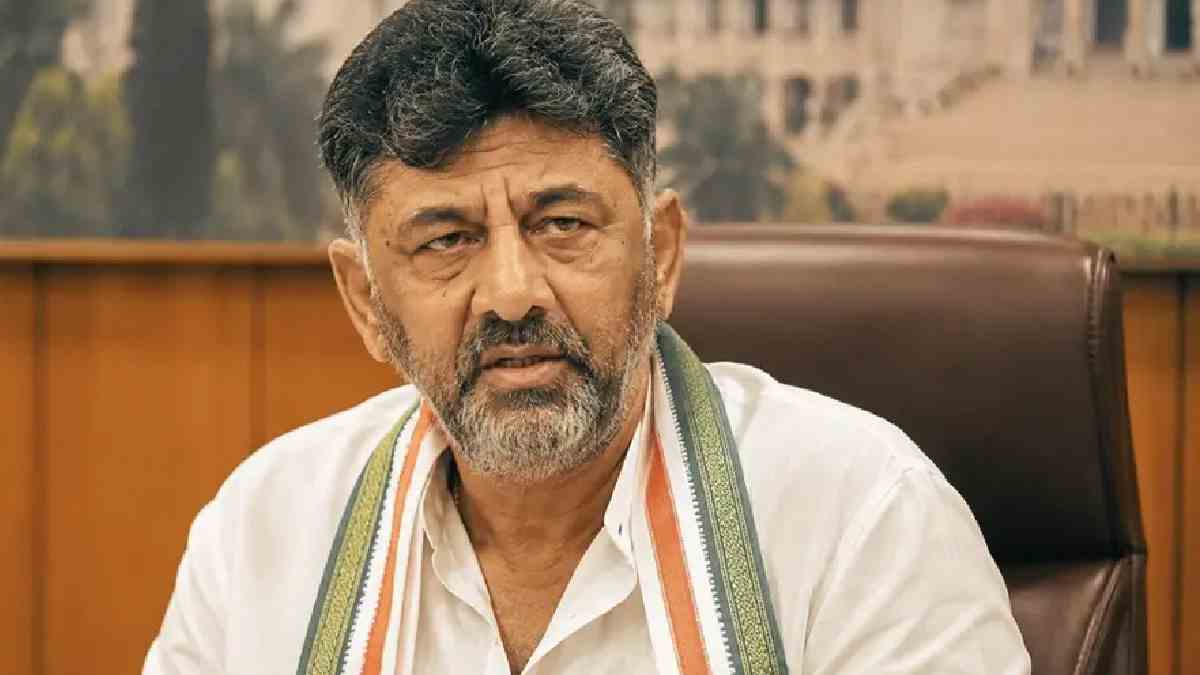
Karnataka Chief Minister D.K. Shivakumar has said the state government should balance the interests of its farmers and the need to follow the direction of the courts in the latest escalation in the long-standing Cauvery water dispute with Tamil Nadu.

As for the new water-sharing recommendation, Shivakumar said Karnataka must protect the interests of its farmers and must also respect the court’s order. He said the government would consult the state Irrigation Minister before taking any decision.
“Have to protect our farmers, but also follow court's order.
— News Arena India (@NewsArenaIndia) August 11, 2026
We will keep this in mind and discuss with our Irrigation Minister.”
- Karnataka CM DK Shivakumar on CWRC's recommendation to release 12,000 cusecs of Cauvery water per day to TN for the next 15 days pic.twitter.com/4wlwHr0zFb
The report comes even as the Cauvery Water Regulation Committee (CWRC) recommended that Karnataka release 12,000 cusecs of Cauvery water per day to Tamil Nadu for 15 days. The recent recommendation has once again brought the water dispute between the states into sharp focus.

Shivakumar’s comments speak to the difficult position of the Karnataka government as it has to weigh legal obligations and the water needs of farmers in the state. The Cauvery dispute has historically triggered strong political reactions and protests in Karnataka whenever authorities direct additional releases of water to Tamil Nadu.
The Chief Minister said that the government would keep farmers’ concerns in mind when determining the new direction, as farmers should be kept in mind in the future. His comments also suggest that the state will be talking to its irrigation administration before deciding what course of action to take next.
It is particularly sensitive because the Cauvery is an invaluable water source for both Karnataka and Tamil Nadu. With distress or insufficient rainfall in mind, farmers' pressures to produce water, drinking water, and legal responsibilities can bring huge pressure on governments in both states.
The new CWRC recommendation comes at the same time as discussions about the availability and distribution of Cauvery water are revived. According to reports, the committee considered the reservoir situation and the arguments given by both states before recommending the release of 12,000 cusecs.
For Karnataka, the biggest concern is whether there is still enough water to feed itself for its own agricultural needs. Farmers in the Cauvery basin have repeatedly expressed concerns about water availability, especially when reservoir levels are under pressure.
Tamil Nadu, for its part, has maintained that water releases are necessary to serve the farmers and keep standing crops. Water availability and agricultural requirements have often been contested between the two states and the Cauvery regulatory authorities and courts.
The latest development is another chapter in a dispute that has continued for decades. Previous directions on Cauvery water releases have frequently been followed by political disagreements, protests and legal proceedings. The issue has remained one of the most politically sensitive inter-state water disputes in India.
Shivakumar’s comments also come at a time of high political interest in Karnataka. In the past, the state government had held several talks with political leaders and stakeholders to get a clear picture of its views about Cauvery and the future of Cauvery.
The Chief Minister’s approach indicates that Karnataka is taking into account the latest recommendation and is looking at it carefully before coming to a decision on implementation. The state has to consider farmers, drinking water requirements and the legal framework of the Cauvery dispute at the same time.
The situation is also being closely monitored in Tamil Nadu, where any delay or reduction in the recommended release could trigger a new round of political and legal responses.
The Cauvery dispute has shown how quickly water-sharing decisions can become a major political issue. In 2016, Supreme Court directives on water releases led to large protests and significant law and order problems in Karnataka.
Karnataka government’s response to this latest recommendation will be closely watched by farmers, political parties and residents in the Cauvery basin.
At the same time, Shivakumar has made it clear that Karnataka's farmers remain an important concern for the government as long as we see that Karnataka’s farmers are still being taken into account while the government is considering its responsibilities under its legal and regulatory obligations in relation to the applicable court and regulatory directions.
The final decision will depend on the consultations within the Karnataka government and the legal position of the latest Cauvery water-sharing recommendation.
The latest episode once again underlines the complexity of managing the Cauvery between two neighbouring states with substantial agricultural and drinking-water requirements.
The government is faced with the challenge of protecting its farmers as it struggles with legal obligations and the competing water needs of Tamil Nadu as Karnataka weighs the 12,000 cusecs recommendation.