China has taken a huge step in establishing a competitive reusable commercial space industry with the first stage of land-based aerospace company LandSpace’s Zhuque-3 rocket landing. As a significant victory for China and the world’s space industry, LandSpace is among the few private companies that have successfully launched their rockets from space and has succeeded in such a way so far.
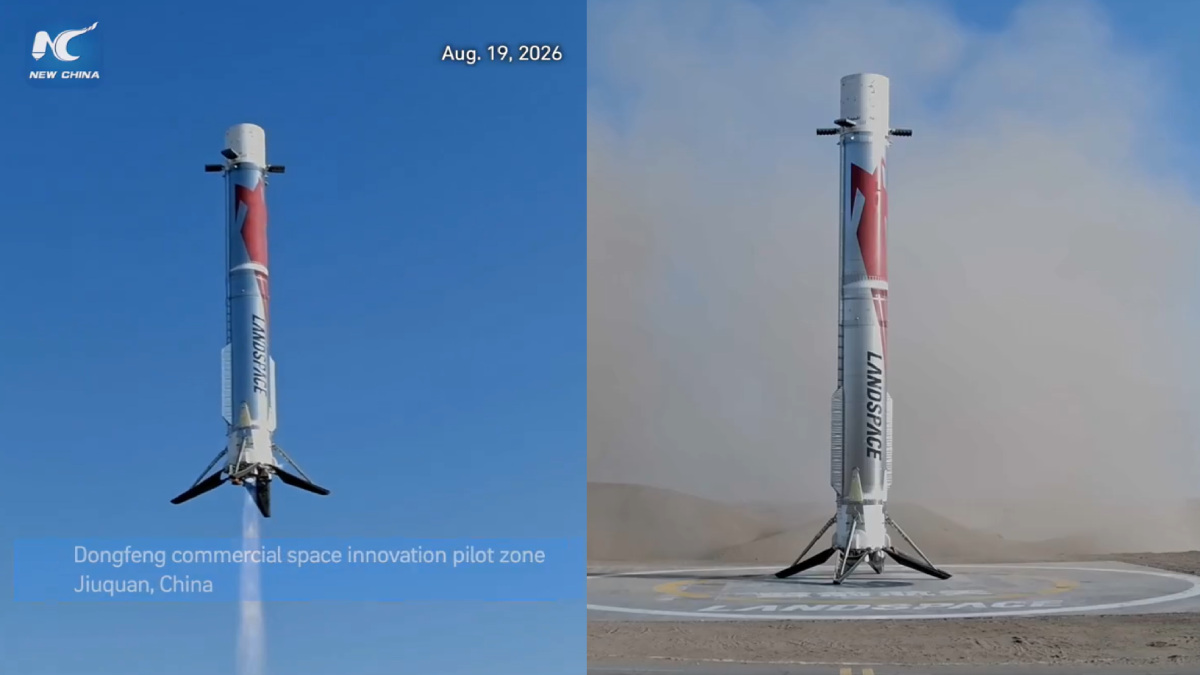
The successful mission took place on August 18 when the 66.1-meter-tall Zhuque-3 rocket lifted off from the Dongfeng Commercial Space Innovation Pilot Zone in northwest China. The rocket’s nine-engine first stage separated as planned and returned to a landing site in Gansu Province of China, about 390 kilometres southeast of the launch site. Chinese state media hailed the mission as a landmark achievement for the country’s fast-growing private space industry.
The landing was especially important because it followed an earlier setback for LandSpace. LandSpace’s first attempt to recover a reusable orbital-class booster in December 2025 reached orbit but failed to land the booster successfully. The recent mission proved that it can not only launch an orbital rocket but also return its most valuable component safely to Earth.
Reusable rocket technology is widely considered one of the most important developments in modern spaceflight. In terms of a commercial space industry, the use of recoverable and reusable rocket boosters can dramatically lower launch costs and increase the frequency of missions. As such, SpaceX can launch satellites, cargo, and crewed missions at a rate that had previously been impossible. China can now feel the pressure of this growing market.
LandSpace has positioned Zhuque-3 as a direct competitor to SpaceX’s Falcon 9 rocket. It is the unique design and construction of Zhuque-3 that makes it so much more robust; Zhuque-3 is made of stainless steel and is able to withstand extreme temperatures, which is a factor that could lower manufacturing costs. It uses methane and liquid oxygen, which provides a cleaner propellant combination than liquid oxygen and kerosene used by Falcon 9. Methane-fueled rockets will be more and more important in future reusable launch systems and deep space missions, experts say.

MISSION SUCCESS | ZhuQue-3 Y2 Reusable Launch Vehicle Achieved Full Success in Orbital Insertion and First-Stage Recovery
— LandSpace (@LandSpace_Tech) August 19, 2026
On August 19, 2026, at 07:35 (UTC+8), the ZhuQue-3 (ZQ-3) Y2 reusable launch vehicle lifted off from the Dongfeng Commercial Space Innovation Pilot Zone.… pic.twitter.com/fshijOxgtc
In terms of payload, Zhuque-3 can deliver up to 14.2 metric tonnes to low Earth orbit for an expendable mission. While this is short of Falcon 9's 22.8-tonne capacity, LandSpace is confident that its design is a long-term value creation with reusability. The company has also previously said that a single booster could be reused 20 times, significantly reducing the cost of operation.
LandSpace is now facing the next critical challenge: proving that reusable launches will become a viable commercial service. Company officials have said they will relaunch a recovered Zhuque-3 first-stage booster in six months. Reliable turnaround times between launches would indicate China is moving beyond experimental recovery missions and toward routine reusable operations.
China launched the reusable rocket Zhuque-3 on Wednesday morning, achieving its first recovery of a rocket's first stage on land. #Zhuque-3 pic.twitter.com/Sut9LgOoYs
— China Xinhua News (@XHNews) August 19, 2026
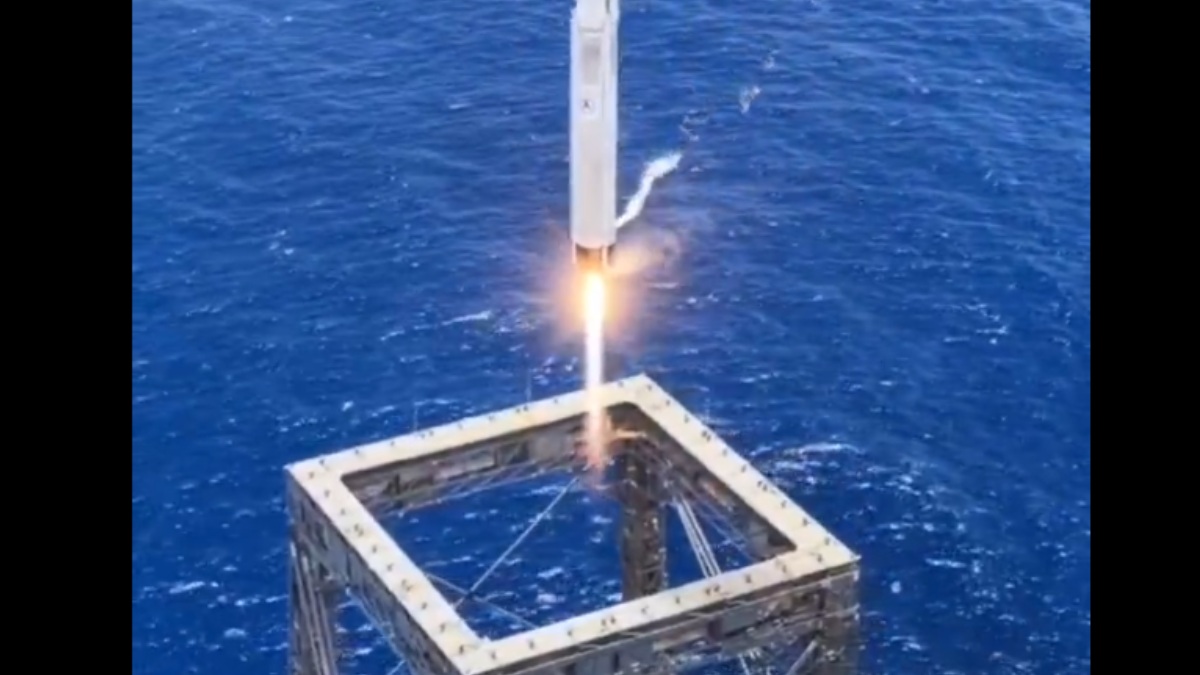
It also indicates that China is taking a more holistic approach in developing multiple booster recovery technologies. China's engineers recently tested a new net-based system to catch experimental boosters on a floating platform at sea last year to make recovery of rockets much more efficient and cheap.
LandSpace is also working on future growth and planning to raise around 7.5 billion yuan (about $1.11 billion) through a listing on Shanghai's STAR Market. LandSpace targets to be profitable by 2029 as its satellite launches and commercial space services demand grows.
With the successful Zhuque-3 landing, China has moved a step closer to becoming a major player in the reusable launch space market. SpaceX is still leading in booster recovery and rapid reuse, and LandSpace’s success demonstrates that China’s private space industry is working for commercial spaceflight and becoming a serious competitor.